


Business Credit Cards in the UAE: Everything You Need to Know Before You Apply (2026)
A business credit card is one of the first financial tools any UAE company needs — and one of the most misunderstood. Whether you are a freelancer with a free zone licence, an SME owner running a team of ten, or a finance manager at a mid-size corporate, the right business credit card does far more than let you pay for things. It separates your personal finances from your company's, gives you an interest-free credit line for managing cash flow, puts spending controls on employee cards, earns rewards on money you were going to spend anyway, and creates the clean transaction trail you need for VAT returns and corporate tax filings.
Yet most business owners in the UAE pick their card based on which bank they already have a relationship with — or worse, based on the rewards headline on the brochure. This guide explains what a business credit card actually does, why it matters for your company, and what to look for when choosing one in the UAE market in 2026.
What Is a Business Credit Card?
A business credit card is a revolving credit facility issued to a company rather than an individual. In the UAE, it is issued against your trade licence — whether that is a DED licence, a free zone certificate, or a freelance permit — rather than your personal salary certificate. The credit limit is assessed based on your company's financial standing (turnover, bank balances, and trading history) rather than your personal income alone, though many banks require a personal guarantee from the business owner as additional security.
The card functions the same way as a personal credit card — you spend during a billing cycle, receive a statement, and either pay the full balance within the grace period (typically 55 to 60 days interest-free) or carry a balance and pay monthly interest. The critical difference is that every transaction sits under the company's name, making accounting, tax reporting, and expense reconciliation significantly cleaner.
Why Your UAE Business Needs a Dedicated Business Credit Card
Separating Personal and Business Expenses
This is the most important reason, and the one most sole traders and freelancers in the UAE ignore until tax time. The UAE introduced corporate tax in June 2023, and every business earning above AED 375,000 in taxable income now files annual returns. If your personal and business expenses are mixed on the same card, you (or your accountant) will spend hours untangling which transactions are deductible business costs and which are personal. A dedicated business credit card eliminates this problem entirely. Every transaction on the card is a company expense by default.
The same applies to VAT. All UAE businesses registered for VAT need to track input tax on purchases. When business spend is mixed with personal spend, reclaiming input VAT credits becomes an audit risk. A separate business card creates a clean, auditable record of every dirham spent by the company.
Managing Cash Flow with the Interest-Free Grace Period
Every business credit card in the UAE offers a grace period — typically 55 to 60 days — during which no interest or profit charges apply, provided you pay the full statement balance by the due date. This is effectively free short-term financing.
For a business that needs to pay a supplier today but will not receive payment from its own customers for 30 to 45 days, the grace period bridges the gap without costing a single dirham in financing charges. A purchase made on the first day of your billing cycle gets the maximum grace period — up to 60 days of interest-free credit. Time your larger purchases strategically within the cycle, and you extend your company's working capital without touching your overdraft facility or business loan.
This is particularly valuable for SMEs in the UAE where cash flow cycles are often unpredictable and payment terms from larger clients can stretch to 60 or even 90 days.
Controlling Employee Spending
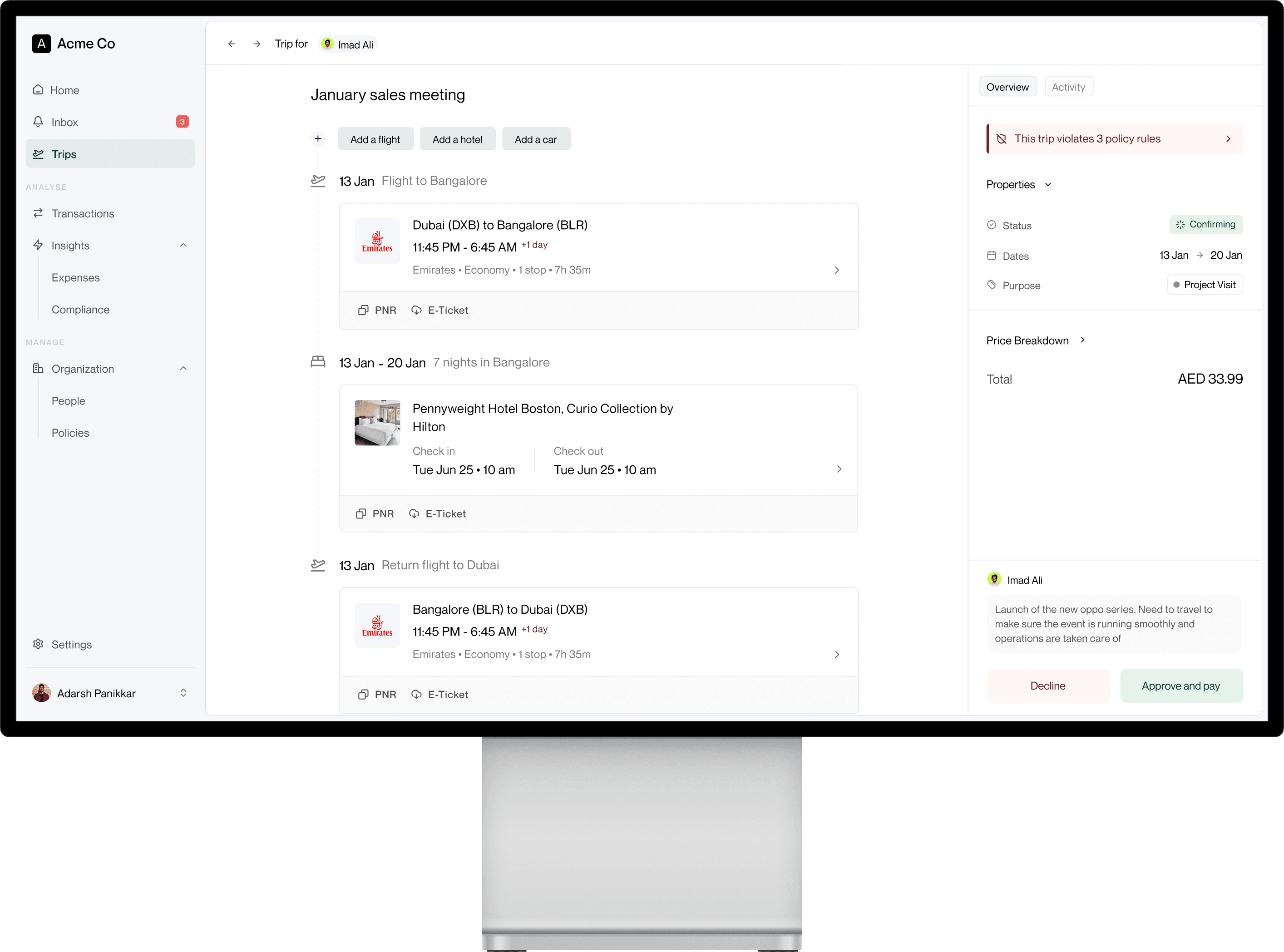
When employees need to make purchases on behalf of the company — travel bookings, client entertainment, software subscriptions, office supplies — you have three options: reimburse them from petty cash (messy and hard to track), give them access to the company debit card (risky and uncontrolled), or issue them a supplementary business credit card with an individually set spending limit.
The third option is what business credit cards are designed for. In the UAE, most banks allow you to issue supplementary cards to employees, with each card carrying its own credit sub-limit. For example, if your business card has a total limit of AED 100,000, you can assign an employee's supplementary card a limit of AED 10,000 — and that employee cannot exceed it. The primary cardholder controls the allocation and can adjust limits at any time through online or mobile banking.
Some banks go further. Emirates Islamic allows virtual card numbers linked to the primary card that can be configured for single or multiple uses with specified amount limits and usage dates. Mashreq's VCP Mobile platform (launched in February 2026) enables real-time virtual card issuance directly from the NEO BIZ app. These features give businesses granular control over who spends what, where, and when — without waiting for physical plastic to arrive.
Earning Rewards on Business Spend
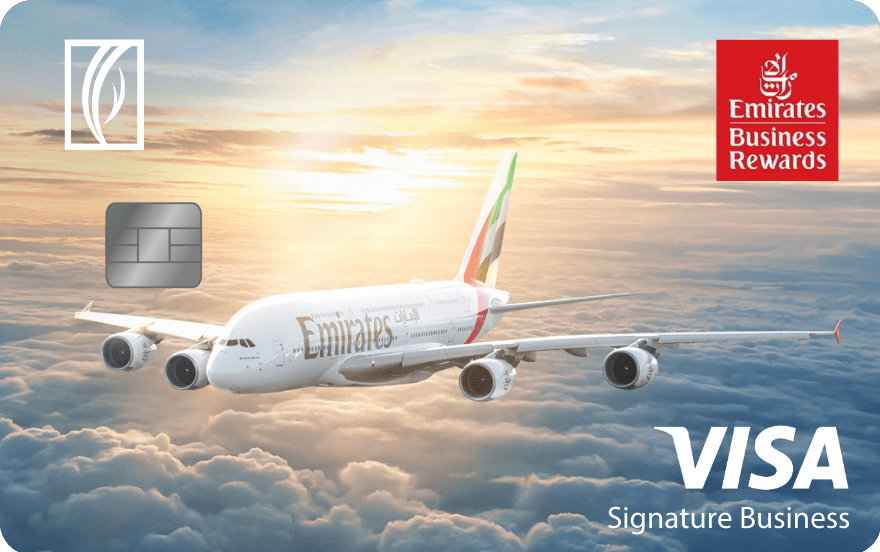
Your company spends money every month on things like rent, utilities, travel, software, advertising, and supplies. A business credit card earns you something back on that spend. Depending on the card, rewards come as cashback (RAKBANK Titanium Business offers up to 1% back), loyalty points redeemable for flights, hotels, and vouchers (Emirates NBD Plus Points, ADCB TouchPoints, Standard Chartered 360° Rewards, CBD Reward Points), or airline miles (Emirates Islamic SmartMiles, which can be exchanged for flights and hotel stays).
The value varies by card and by how your business spends, but even a modest 1% cashback on AED 50,000 in monthly business expenses returns AED 6,000 per year — enough to offset multiple annual fees or fund a team dinner.
Building Your Company's Credit History
In the UAE, business credit data is tracked by the Al Etihad Credit Bureau (AECB) and Dun & Bradstreet (D&B UAE). Every payment you make — or miss — on a business credit card feeds into your company's credit profile. A strong credit history opens doors to higher credit limits, business loans with better terms, and more favourable relationships with suppliers who run credit checks before offering trade terms.
Conversely, late payments, defaults, and bounced cheques are flagged and can damage your company's creditworthiness for years. Using a business credit card responsibly — spending within limits and paying the full balance each month — is one of the simplest ways to build a positive credit profile for your UAE business.
Business Credit Card vs Personal Credit Card: What Is the Difference?
Many sole traders and freelancers in the UAE use a personal credit card for business expenses. This works until it does not — usually around the time you need to file your first corporate tax return, apply for a business loan, or bring on an employee who needs a company card.
The key differences between the two come down to how the card is assessed, how much credit you get, and what features are available.
A personal credit card is assessed on your individual salary and personal credit score, while a business credit card is assessed on your company's revenue, bank balances, and trading history. Personal cards typically cap at AED 50,000 to AED 100,000 for most salaried professionals, whereas business credit limits can range from AED 50,000 up to AED 2,000,000 depending on company financials. Supplementary employee cards are a standard feature on business cards but not available on personal cards (supplementary cards on personal accounts are intended for family members). Business cards also generate company-named statements that align directly with your accounting and tax records.
If your company is generating revenue and you are still using a personal card for business expenses, switching to a business card is worth the minor effort of applying.
What to Look for When Choosing a Business Credit Card in the UAE
Annual Fee
Business credit cards in the UAE range from free for life (RAKBANK Titanium Business, Emirates Islamic Business, CBD Business) to AED 525–1,050 for fixed-fee products and fully negotiable fees for corporate-tier cards. The annual fee is only relevant in context — a card that costs AED 1,050 per year but earns you AED 6,000 in rewards is better than a free card that earns nothing.
That said, if your business is new, revenue is unpredictable, or you simply want to keep overheads low, the free-for-life options are legitimate choices. RAKBANK's Titanium Business in particular offers genuine cashback with zero annual cost.
Interest Rate (APR / Profit Rate)
If you plan to pay the full balance every month, the interest rate is irrelevant — you will never be charged it. But if your business occasionally carries a balance (and many do, especially during slow revenue months), the rate matters enormously.
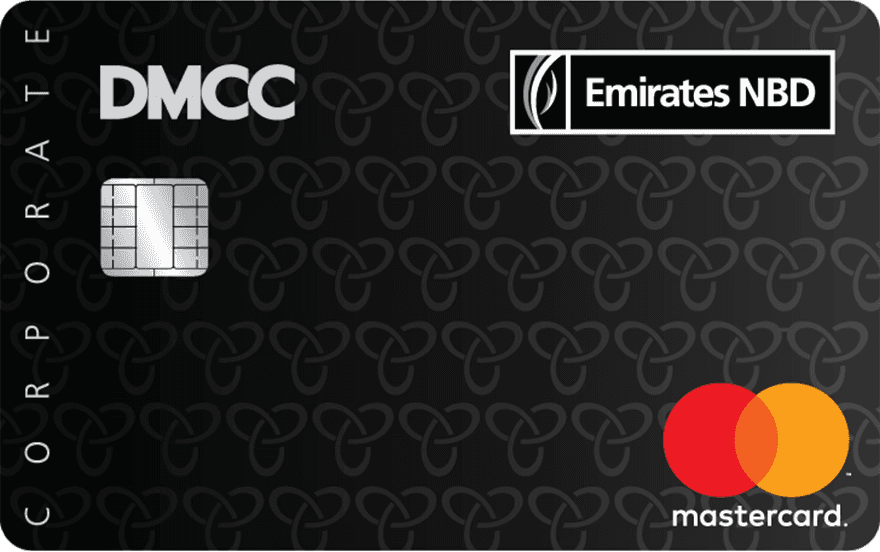
UAE business credit cards range from 23.88% annually (1.99% per month) on Emirates NBD corporate cards to 41.4% (3.45% per month) on RAKBANK, CBD, HSBC, and Standard Chartered products. The difference is not trivial. On a carried balance of AED 100,000, the monthly interest charge at 1.99% is AED 1,990, while at 3.45% it is AED 3,450 — a gap of AED 1,460 per month or AED 17,520 per year.
If your business uses the credit card as a genuine financing tool (not just a spending tool), prioritise the lowest APR. Emirates NBD's corporate card range is the clear leader here.
Foreign Transaction Fee
Every time you make a purchase in a foreign currency — USD software subscriptions, EUR supplier invoices, GBP advertising spend — the card network (Visa or Mastercard) applies an exchange rate markup, and the bank adds its own fee on top. In the UAE, this total foreign transaction fee typically ranges from 2% to 2.99%.
For a business spending AED 30,000 per month in foreign currencies, the difference between a 2% fee (RAKBANK, CBD) and a 2.99% fee (Standard Chartered) costs nearly AED 3,600 per year. If your business operates internationally, subscriptions to platforms like Google Workspace, Adobe, AWS, Meta Ads, or Shopify are all billed in foreign currencies — making this fee a recurring drag on your expenses.
Rewards Programme
Not all business cards earn rewards, and not all rewards are created equal. The main types available in the UAE are cashback (a direct percentage of your spend returned as cash or statement credit), points (earned per dirham spent and redeemable for flights, vouchers, cashback, or merchandise), and airline miles (earned directly and usable for flights and upgrades).
Cashback is the simplest to value — 1% back is 1% back regardless of how you spend. Points and miles require more analysis because their value depends on how you redeem them. A point redeemed for an Amazon voucher may be worth AED 0.01, while the same point converted to an airline mile and used for a Business Class upgrade could be worth AED 0.05 or more.
When evaluating rewards, also check for earning caps. Emirates NBD's Plus Points programme, for example, caps earning at 500 points per statement — meaning businesses that spend heavily will hit the ceiling and stop earning, effectively reducing the card's rewards rate to zero on spend above the cap.
Employee Card Controls
If you plan to issue cards to employees, check what controls the bank offers. At minimum, you want individual sub-limit assignment (so each employee has their own cap), the ability to adjust limits without visiting a branch, consolidated billing where all supplementary card transactions appear on a single statement, and real-time transaction visibility through mobile or online banking.
More advanced features to look for include merchant category blocking (prevent employees from using the card at certain types of merchants), virtual card issuance for online-only purchases with single-use limits, and per-transaction caps in addition to monthly limits.
VAT and Corporate Tax Compliance Features
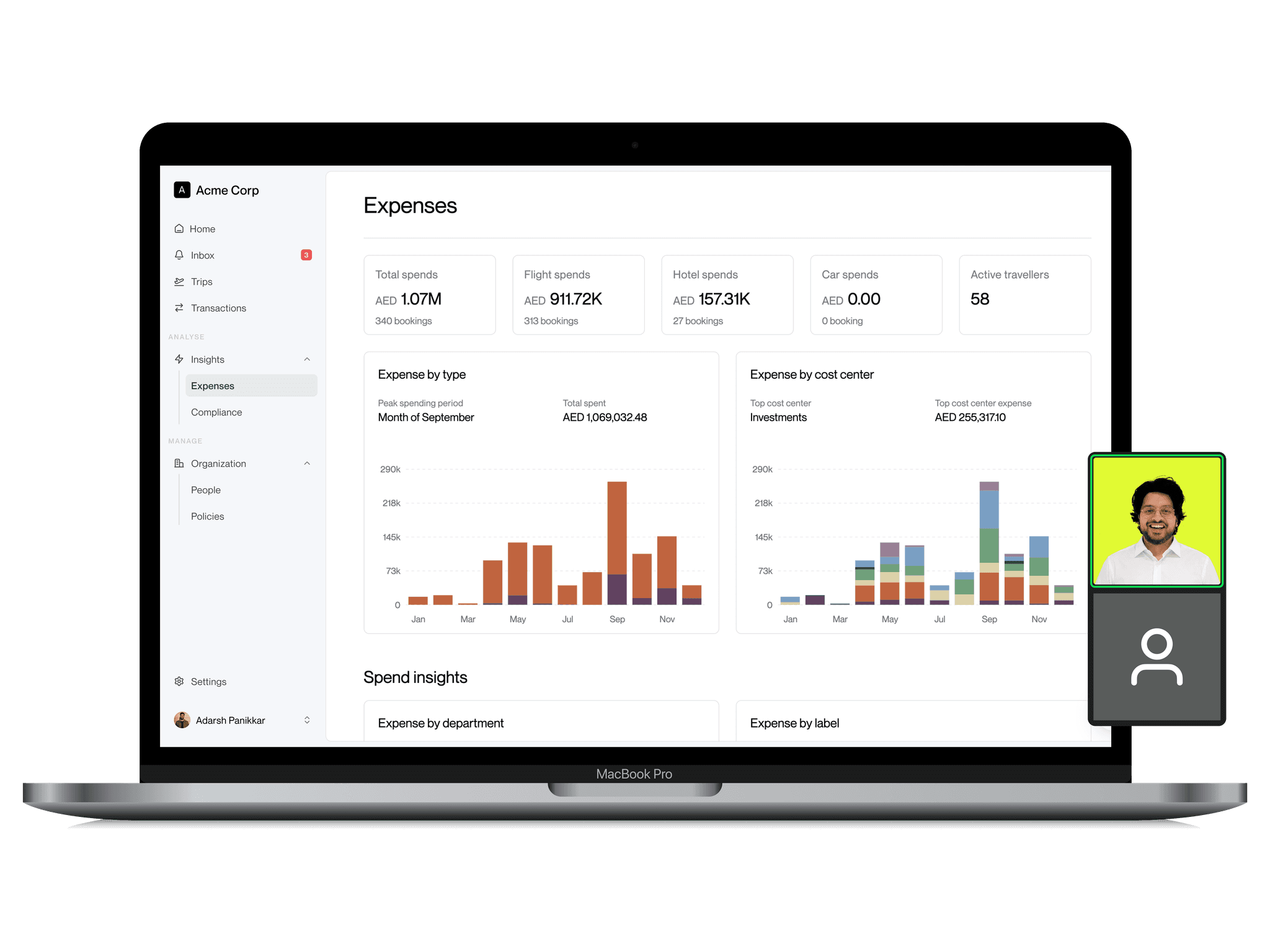
Since the UAE introduced corporate tax and already had VAT in place, the quality of your card's transaction reporting directly affects your accounting workload. Look for detailed monthly statements with merchant names, dates, amounts, and category codes, the ability to export statements as CSV or integrate with accounting software (QuickBooks, Xero, Zoho, Tally), and clear separation of domestic and international transactions (relevant for VAT input tax claims).
Some fintech corporate cards (Pemo, Alaan, Qashio) offer automatic VAT categorisation and real-time expense tagging as a core feature. Traditional bank cards typically provide the raw transaction data via statements, and your accounting team handles the categorisation.
Who Can Apply for a Business Credit Card in the UAE?
Eligibility Requirements
The core requirements are consistent across most UAE banks. You need a valid UAE trade licence (DED, free zone, or freelance permit), the business must be operational — most banks require at least six months to one year of trading history, company bank statements for the last three to six months showing regular cash flow, Emirates ID and passport copies of the business owner or authorised signatory, and a memorandum of association or articles of incorporation (for LLCs and corporate entities).
For corporate cards with negotiable terms, banks may also require a board resolution authorising the card application, audited financial statements, and a minimum annual turnover (this varies by bank — some start at AED 1 million).
What If You Are a Startup or Freelancer?
Startups with less than six months of trading history face a harder road with traditional banks. Options include RAKBANK's Titanium Business (one of the more accessible applications for newer businesses), Emirates Islamic Business Card (requires an existing banking relationship with EI), and fintech alternatives like Pemo, Alaan, or Qashio that use different underwriting models and can issue virtual cards quickly.
Freelancers holding a valid freelance permit can apply for business credit cards, though some banks treat self-employed applicants as higher risk. Having an active business account with the issuing bank significantly improves approval chances.
Common Mistakes to Avoid
Treating the Business Card as a Financing Tool Without Checking the APR
At 3.45% per month (41.4% annually), carrying a balance on most UAE business credit cards is extremely expensive. If you need financing, a business loan or overdraft facility at 8–12% annually is far cheaper. Use the credit card for the interest-free grace period, and pay the full balance each month. The only exception is the Emirates NBD corporate range at 1.99% per month, where carrying a short-term balance is more defensible.
Ignoring the Foreign Transaction Fee
Many UAE businesses do not realise they are paying 2.75% on every foreign currency transaction until they see thousands of dirhams in fees on their annual statement. If your business spends internationally, this fee should be a primary selection criterion — not an afterthought.
Choosing Based on Rewards Alone
A card with generous rewards but a high annual fee and expensive APR can cost your business more than a no-fee, no-rewards card if your spending patterns do not align with the rewards structure. Always calculate the net value: rewards earned minus annual fees minus any interest charges if you occasionally carry a balance.
Not Issuing Employee Cards When You Should
If you are still reimbursing employees from petty cash or letting them use a shared company debit card, you are creating accounting headaches and audit risks. Issue supplementary business credit cards with individual limits. The transactions are tracked, the limits are controlled, and the monthly statements are consolidated — saving your accountant hours every month.
Mixing Personal and Business Spend
With corporate tax now a reality in the UAE, this mistake has real financial consequences. Mixed spend means unclear deductions, difficult VAT input claims, and potential audit flags. Get a dedicated business card and use it exclusively for company expenses.
The Bottom Line
A business credit card in the UAE is not a luxury or a perk — it is a basic operational tool. The right card gives your business an interest-free credit line for cash flow management, clean expense separation for tax compliance, spending controls for employees, rewards that offset real costs, and a credit history that opens doors to better financing.
The UAE market in 2026 offers genuine choice: free-for-life cards for cost-conscious startups, rewards-heavy cards for high-spending SMEs, low-APR corporate cards for businesses that need financing flexibility, and control-focused cards for companies managing distributed teams. The comparison table above breaks down every option side by side — use it alongside this guide to find the card that fits how your business actually operates.