
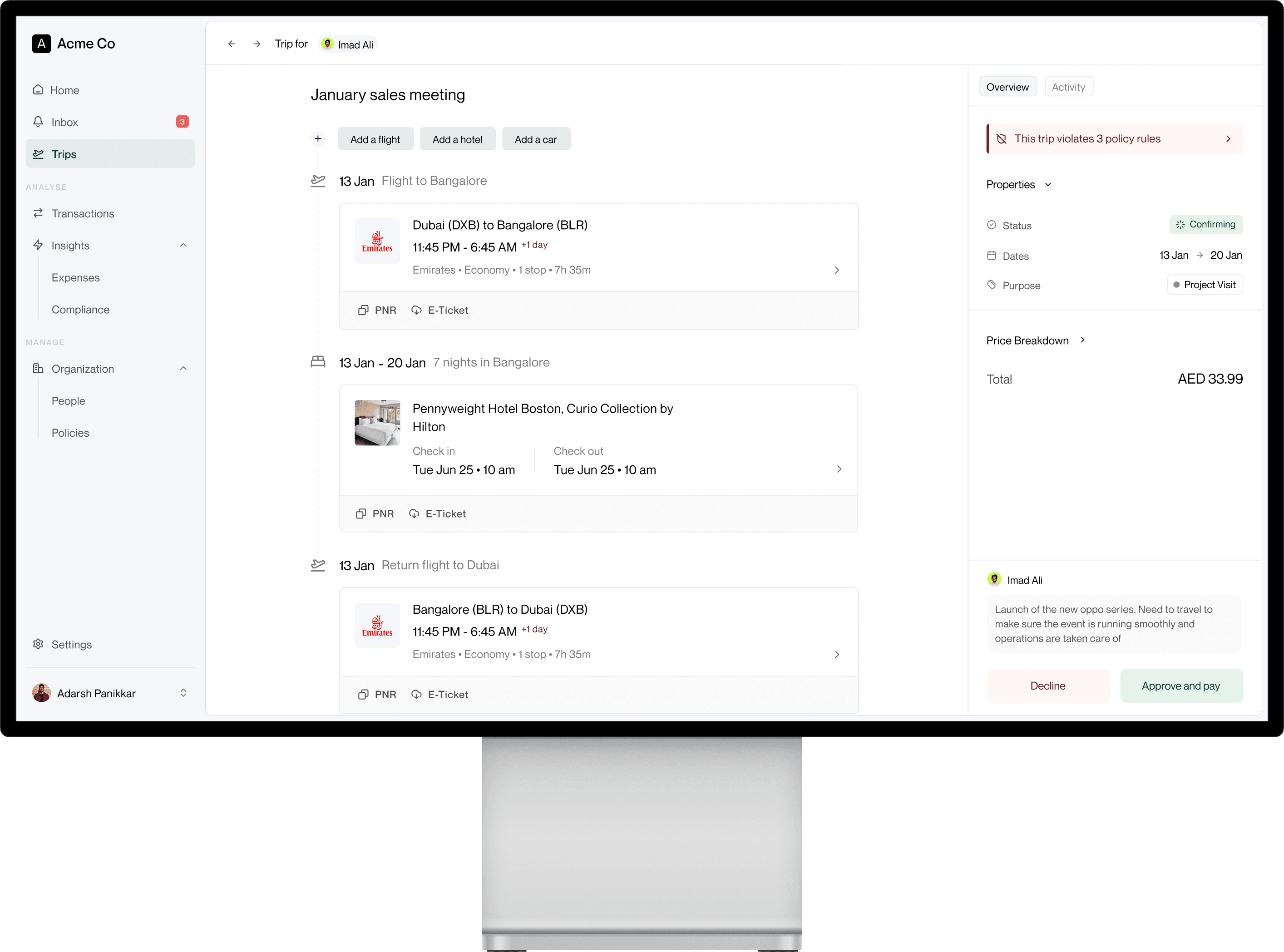

Never chase travel expenses again
Kitt gives accounting teams clean, reconciled travel data from the moment a trip is booked — not weeks later.


Never chase travel expenses again
Kitt gives accounting teams clean, reconciled travel data from the moment a trip is booked — not weeks later.


Never chase travel expenses again
Kitt gives accounting teams clean, reconciled travel data from the moment a trip is booked — not weeks later.


Powered by the world's best

Why accountants dread travel expenses
"I'm chasing receipts, not closing books"
You're tracking down documents and fixing codes instead of strategic finance work.
"I'm chasing receipts, not closing books"
You're tracking down documents and fixing codes instead of strategic finance work.
"I'm chasing receipts, not closing books"
You're tracking down documents and fixing codes instead of strategic finance work.
"The numbers never match"
Agency invoices, credit card charges, and expense reports - all different, endless confusion
"The numbers never match"
Agency invoices, credit card charges, and expense reports - all different, endless confusion
"The numbers never match"
Agency invoices, credit card charges, and expense reports - all different, endless confusion
"I find out about travel spend 30 days too late"
You can't close accurately because invoices arrive weeks after trips happen.
"I find out about travel spend 30 days too late"
You can't close accurately because invoices arrive weeks after trips happen.
"I find out about travel spend 30 days too late"
You can't close accurately because invoices arrive weeks after trips happen.
"Audit season is a nightmare"
Digging through email threads to find who approved what and why.
"Audit season is a nightmare"
Digging through email threads to find who approved what and why.
"Audit season is a nightmare"
Digging through email threads to find who approved what and why.
Kitt is designed to accelerate accounting so teams can end manual work
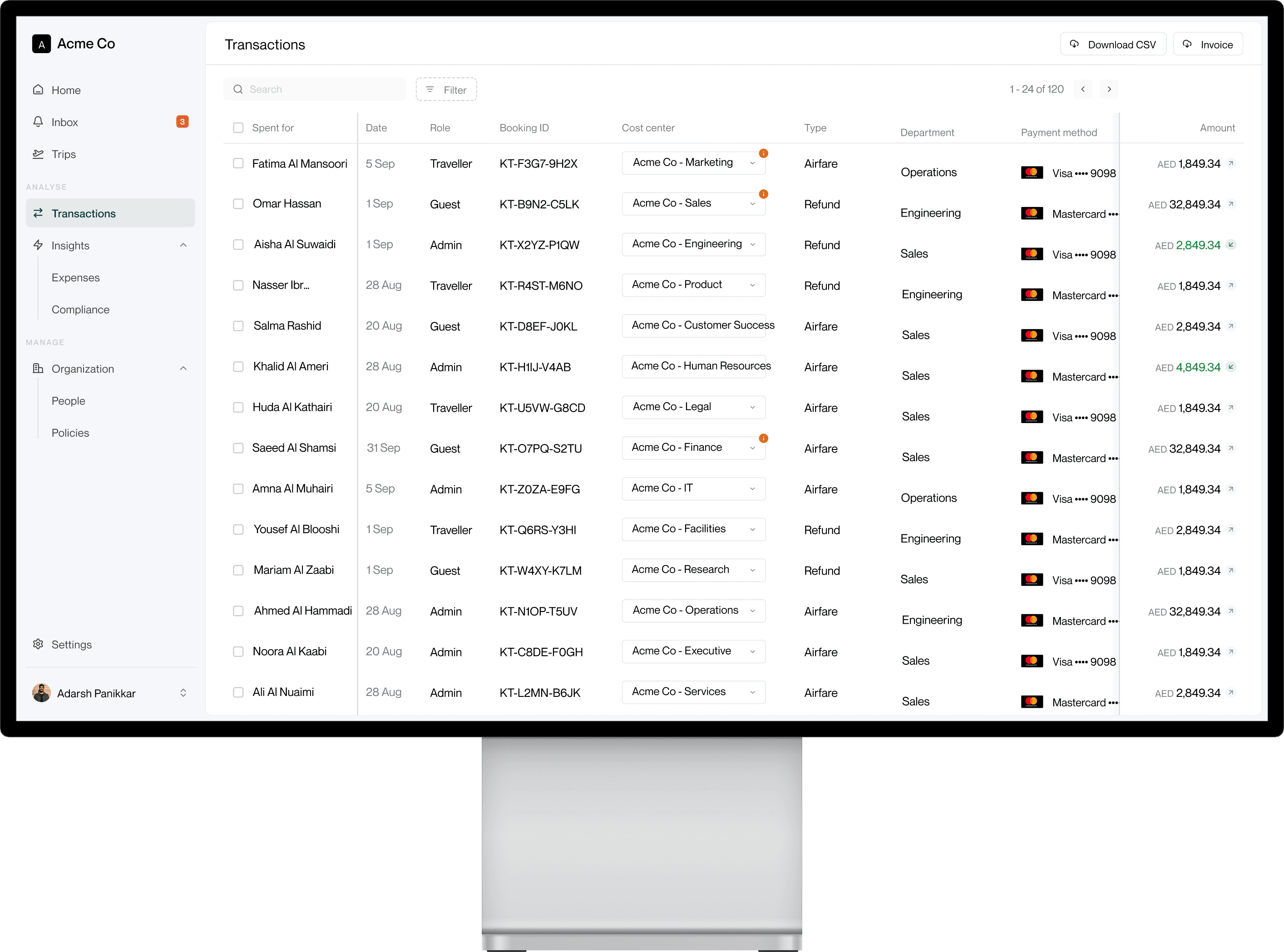
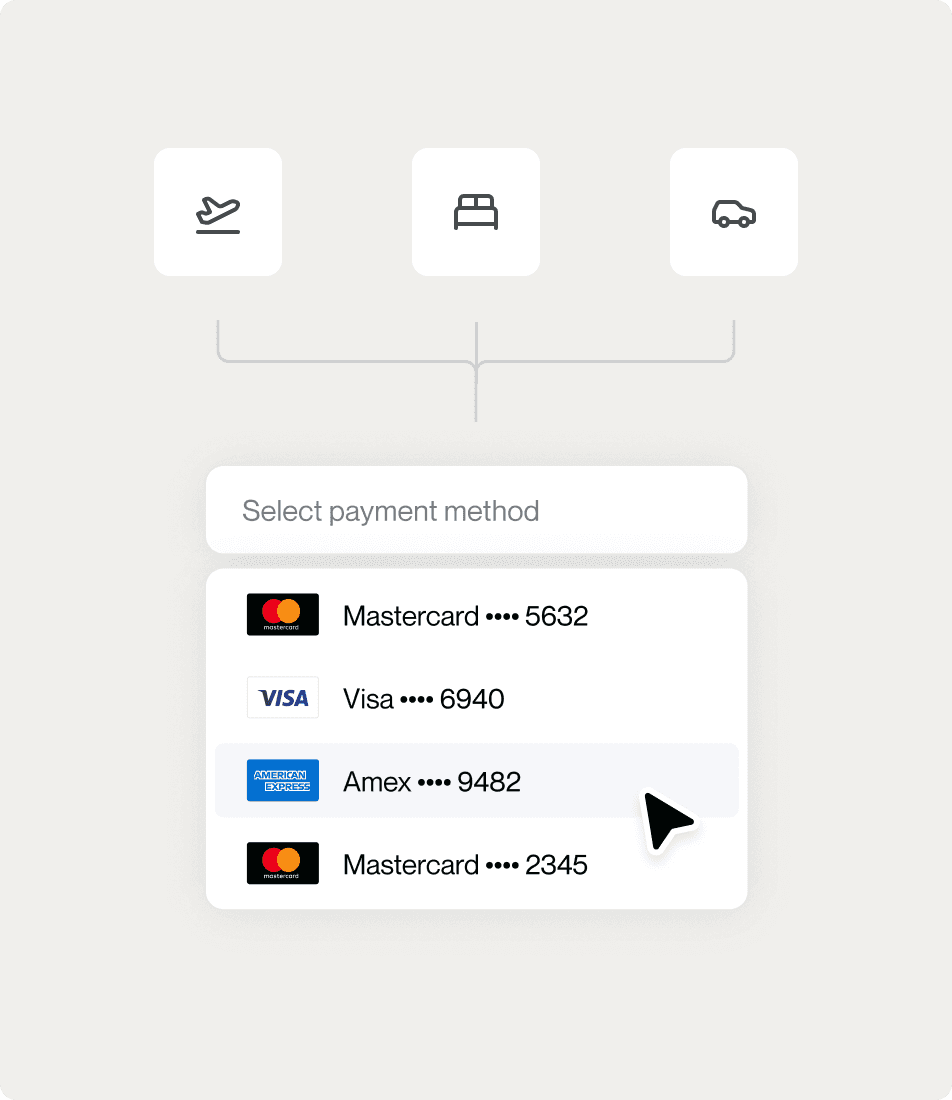
Centralized billing for all travel
Instead of cards scattered across airline and hotel sites, all travel charges flow through one controlled billing setup.
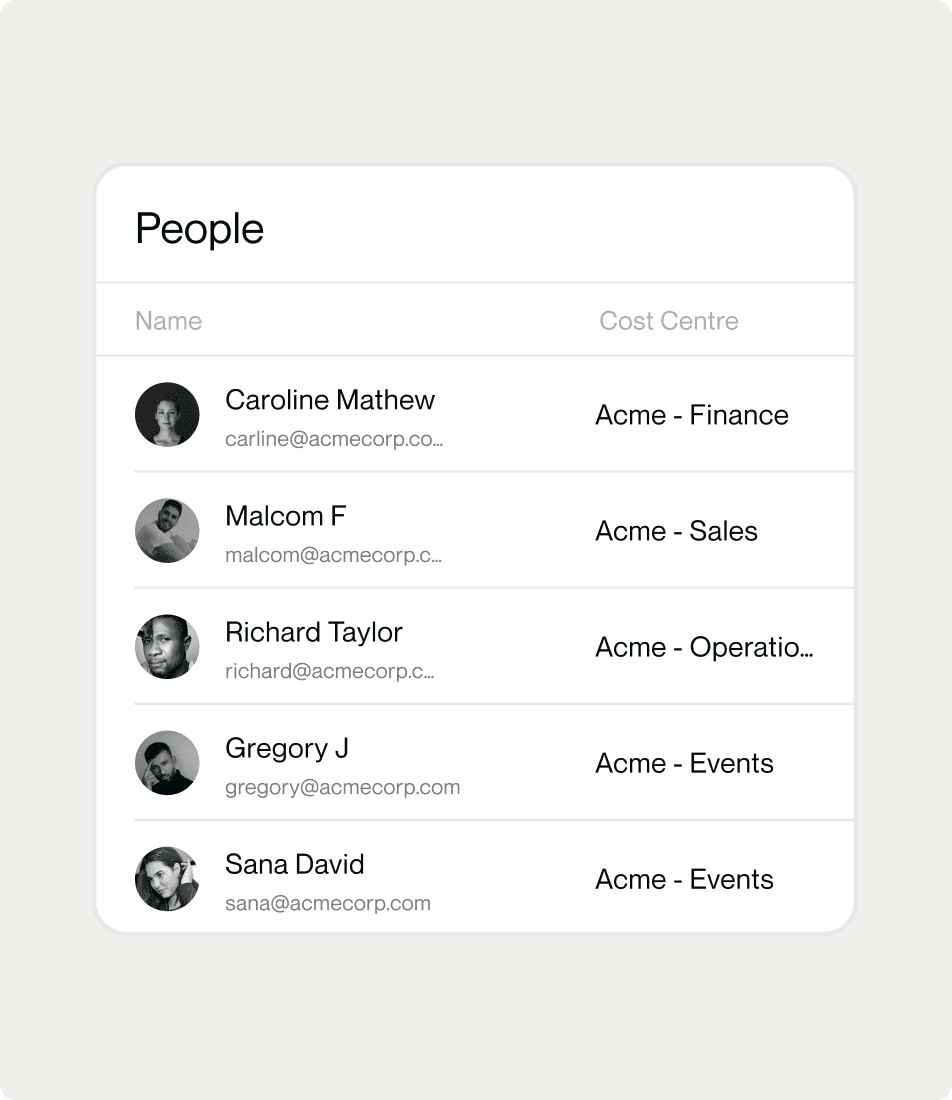


Cost centres that don’t need fixing
Create custom cost centres and link them to travellers once — no re-tagging or corrections later.
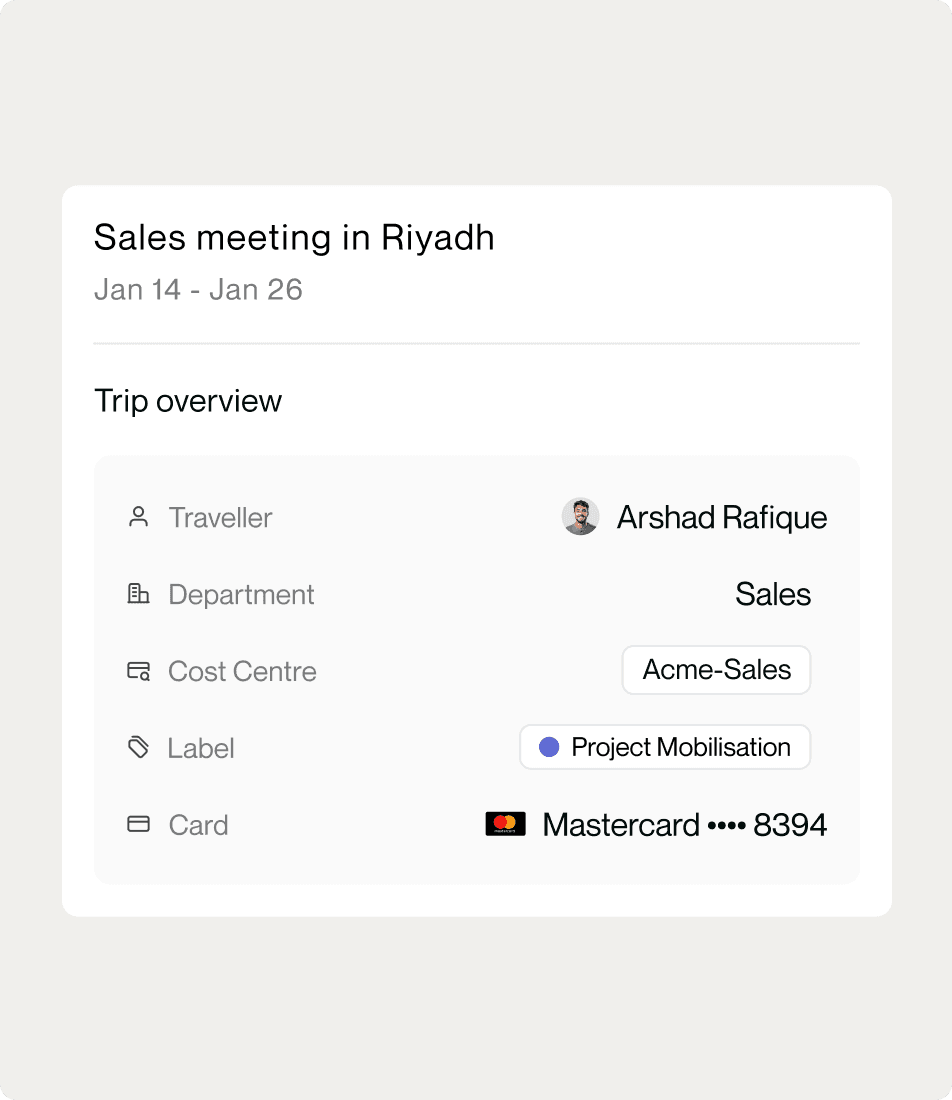
Spend attributed automatically
Each trip is tied to the right traveller, card, and cost centre at booking, so reconciliation happens as spend occurs.
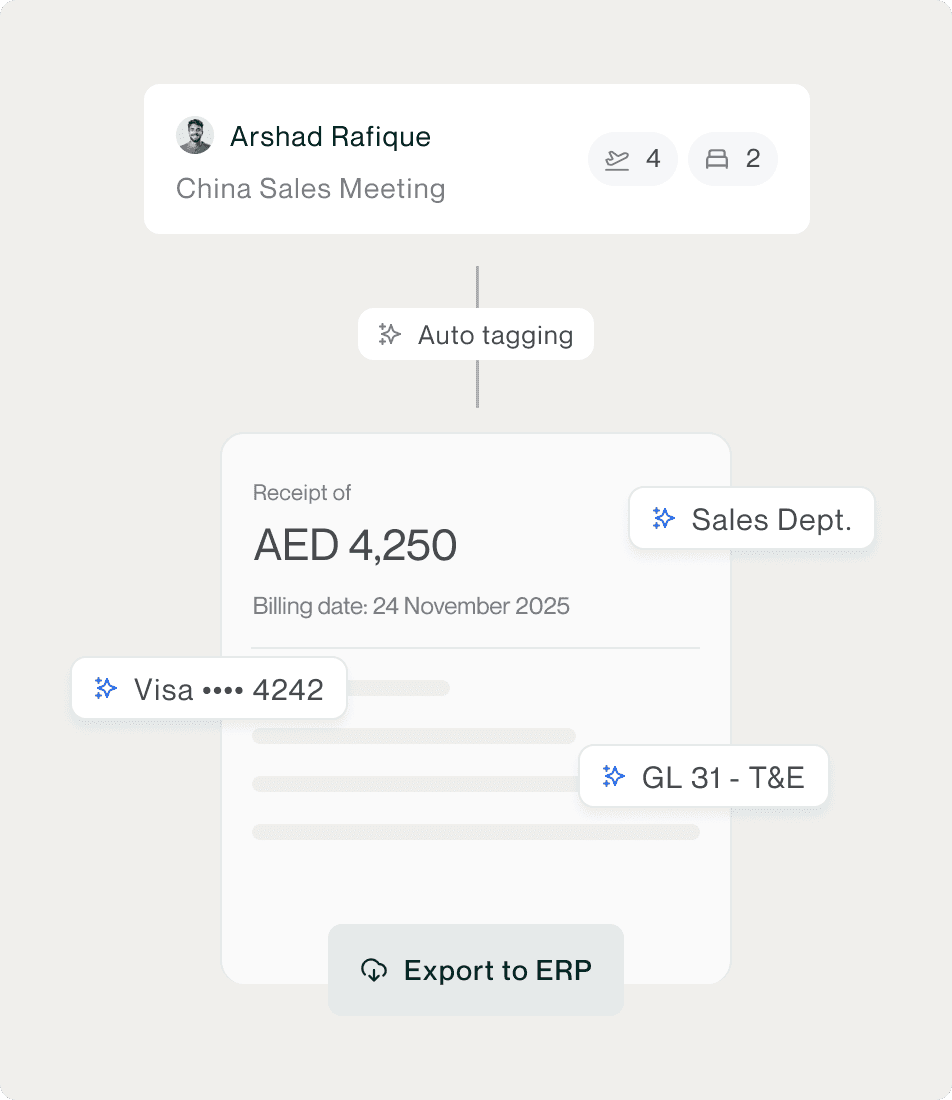


Receipts and exports, ready instantly
Every booking comes with an instant receipt and clean CSV exports — ready for audits, payroll, or your accounting system.
coming soon
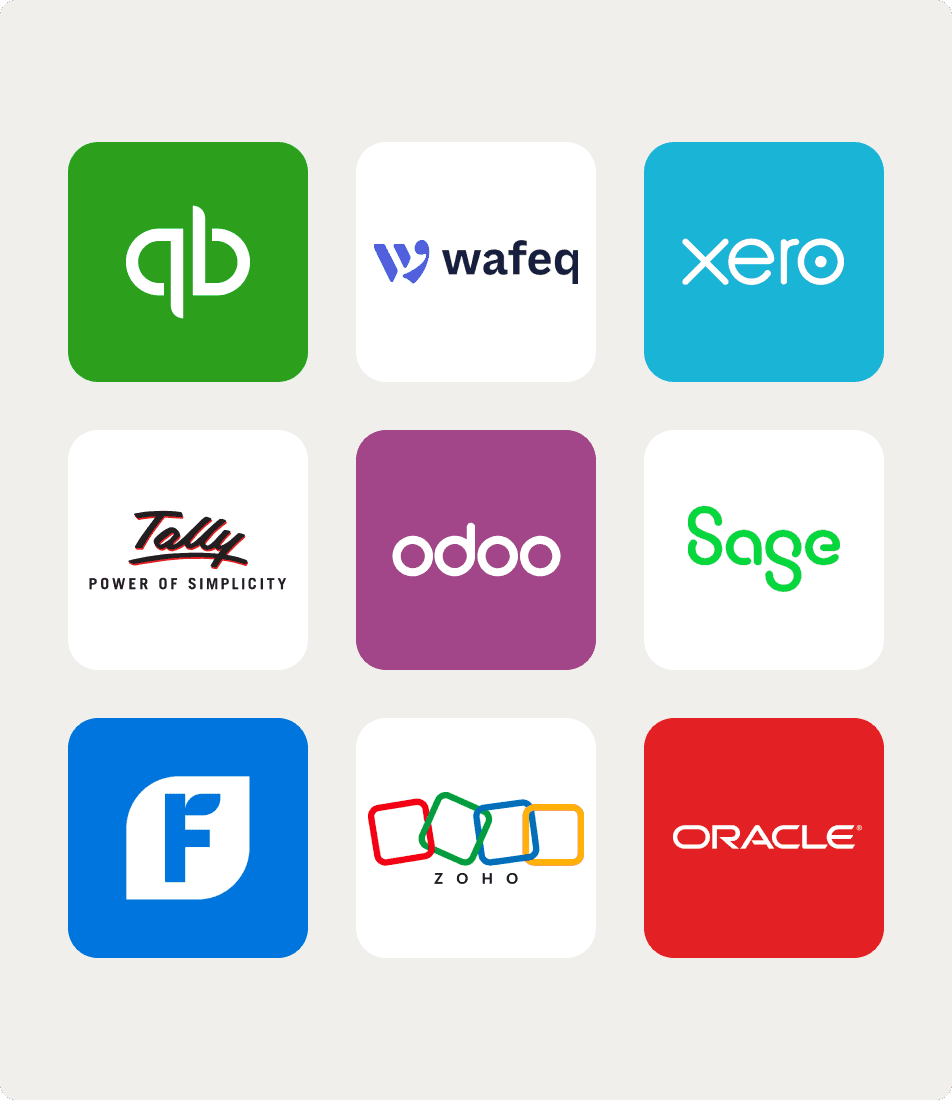
Auto-sync with your existing tools
Travel data flows straight into your ERP, already structured for posting and reconciliation.


Frequently Asked Questions
How does Kitt actually eliminate manual travel expense entry?
Every booking automatically becomes a fully-formed accounting entry the second it's confirmed—no data entry needed. Kitt captures: transaction date and amount, vendor name (airline, hotel, car rental), cost center traveler name, payment method (which corporate card), VAT/tax codes, and attached receipts. At month-end, you're not typing 50+ transactions from credit card statements—you're reviewing pre-categorized entries and clicking "export." What used to eat 2-3 days now takes 30 minutes.
Do I still need to chase employees for missing receipts?
Never again. Kitt automatically generates and stores receipts for every booking: flight confirmations with fare breakdowns, hotel folios with nightly rates, car rental agreements with daily charges, and email confirmations with booking references. Everything is attached to the transaction automatically—no employee action required.
What if our CFO asks "Can you stand behind these numbers in an audit?"
Absolutely. Kitt's data is: Complete: Every booking has attached receipts, approval trail, policy documentation Accurate: Auto-categorized by rules you define—no human coding errors Auditable: Immutable transaction history with timestamps and user actions Traceable: Drill from GL summary → department → employee → individual transaction → original receipt Compliant: VAT/tax codes applied consistently per jurisdiction rules You're not defending estimates or approximations—you're showing auditors exact transactions with complete supporting documentation. Kitt gives you audit-ready books, not books that need cleanup before audit.
How is reconciling Kitt different from reconciling a traditional travel agency's invoices?
With traditional agencies: Invoices arrive 2-4 weeks after travel (sometimes bundling multiple trips) Invoice line items don't match credit card charges (different amounts, dates, or vendors) You're reconciling backwards: "Which trip does this AED 3,450 charge belong to?" Missing details force you to ask the agency or employee for clarification Agency fees buried in line items—hard to separate actual cost from markup Takes 4-8 hours per monthly invoice to reconcile With Kitt: Transactions record at booking time (same day as credit card charge) Every transaction has a unique reference ID that matches your statement exactly You're matching forwards: "Here's the booking, here's the matching charge" All details captured upfront (traveler, trip purpose, GL code, cost center) Transparent pricing—no hidden markups to untangle Takes minutes for an entire month of travel The difference is architectural: agencies create invoices that need reconciliation; Kitt creates accounting entries that ARE the reconciliation.
What's the accounting nightmare when employees book on Booking.com or Expedia?
The chaos you're dealing with now: No visibility until month-end: You see charges on credit card statements with no context—"Marriott AED 850" could be anyone's trip to anywhere Receipt chase: Employees forget to submit hotel/flight confirmations; you're hunting them down weeks later Manual categorization: You're coding every transaction yourself—"Is this domestic or international? Which department? Which project?" Expense report mismatches: Employee submits AED 850, statement shows AED 920—now you're investigating foreign exchange variances Missing approvals: No proof trip was approved; during audits, you're searching email threads Split costs impossible: Can't easily allocate one trip across multiple cost centers or projects Refunds and changes: Employee got a refund, didn't tell you; you're recording expenses that don't exist Result: 15-25 hours/month of manual cleanup, constant back-and-forth with employees, and books you can't fully trust. With Kitt: Every booking is pre-approved, pre-categorized, pre-documented, and pre-reconciled before the charge hits. You're not cleaning up chaos—you're reviewing clean data.
What if our employees resist switching from Booking.com because "it's easier"?
This is a common fear that doesn't play out in reality. Here's what actually happens: Employee perspective: Kitt uses the same inventory as Booking.com (same hotels, same rates) Booking process is just as fast (3 clicks: search, compare, book) Actually easier because no expense reports needed afterward They still earn loyalty points (frequent flyer numbers auto-attach) Your perspective as accountant: Consumer sites = 15 hours/month of cleanup work Kitt = 1.5 hours/month of review work Consumer sites = constant receipt chasing Kitt = automatic documentation Consumer sites = manual GL coding Kitt = auto-categorized at booking Reality: After 30 days on Kitt, employees prefer it because booking is just as easy AND they don't have to submit expense reports. Your CFO prefers it because costs are controlled. You prefer it because your job became 90% less tedious. Everyone wins!
Does Kitt support integrations to accounting software?
Not yet, but it's in the pipeline! We plan on supporting all major accounting software like Zoho, Quickbooks, Xero, Wafeq and many more!
How does Kitt actually eliminate manual travel expense entry?
Every booking automatically becomes a fully-formed accounting entry the second it's confirmed—no data entry needed. Kitt captures: transaction date and amount, vendor name (airline, hotel, car rental), cost center traveler name, payment method (which corporate card), VAT/tax codes, and attached receipts. At month-end, you're not typing 50+ transactions from credit card statements—you're reviewing pre-categorized entries and clicking "export." What used to eat 2-3 days now takes 30 minutes.
Do I still need to chase employees for missing receipts?
Never again. Kitt automatically generates and stores receipts for every booking: flight confirmations with fare breakdowns, hotel folios with nightly rates, car rental agreements with daily charges, and email confirmations with booking references. Everything is attached to the transaction automatically—no employee action required.
What if our CFO asks "Can you stand behind these numbers in an audit?"
Absolutely. Kitt's data is: Complete: Every booking has attached receipts, approval trail, policy documentation Accurate: Auto-categorized by rules you define—no human coding errors Auditable: Immutable transaction history with timestamps and user actions Traceable: Drill from GL summary → department → employee → individual transaction → original receipt Compliant: VAT/tax codes applied consistently per jurisdiction rules You're not defending estimates or approximations—you're showing auditors exact transactions with complete supporting documentation. Kitt gives you audit-ready books, not books that need cleanup before audit.
How is reconciling Kitt different from reconciling a traditional travel agency's invoices?
With traditional agencies: Invoices arrive 2-4 weeks after travel (sometimes bundling multiple trips) Invoice line items don't match credit card charges (different amounts, dates, or vendors) You're reconciling backwards: "Which trip does this AED 3,450 charge belong to?" Missing details force you to ask the agency or employee for clarification Agency fees buried in line items—hard to separate actual cost from markup Takes 4-8 hours per monthly invoice to reconcile With Kitt: Transactions record at booking time (same day as credit card charge) Every transaction has a unique reference ID that matches your statement exactly You're matching forwards: "Here's the booking, here's the matching charge" All details captured upfront (traveler, trip purpose, GL code, cost center) Transparent pricing—no hidden markups to untangle Takes minutes for an entire month of travel The difference is architectural: agencies create invoices that need reconciliation; Kitt creates accounting entries that ARE the reconciliation.
What's the accounting nightmare when employees book on Booking.com or Expedia?
The chaos you're dealing with now: No visibility until month-end: You see charges on credit card statements with no context—"Marriott AED 850" could be anyone's trip to anywhere Receipt chase: Employees forget to submit hotel/flight confirmations; you're hunting them down weeks later Manual categorization: You're coding every transaction yourself—"Is this domestic or international? Which department? Which project?" Expense report mismatches: Employee submits AED 850, statement shows AED 920—now you're investigating foreign exchange variances Missing approvals: No proof trip was approved; during audits, you're searching email threads Split costs impossible: Can't easily allocate one trip across multiple cost centers or projects Refunds and changes: Employee got a refund, didn't tell you; you're recording expenses that don't exist Result: 15-25 hours/month of manual cleanup, constant back-and-forth with employees, and books you can't fully trust. With Kitt: Every booking is pre-approved, pre-categorized, pre-documented, and pre-reconciled before the charge hits. You're not cleaning up chaos—you're reviewing clean data.
What if our employees resist switching from Booking.com because "it's easier"?
This is a common fear that doesn't play out in reality. Here's what actually happens: Employee perspective: Kitt uses the same inventory as Booking.com (same hotels, same rates) Booking process is just as fast (3 clicks: search, compare, book) Actually easier because no expense reports needed afterward They still earn loyalty points (frequent flyer numbers auto-attach) Your perspective as accountant: Consumer sites = 15 hours/month of cleanup work Kitt = 1.5 hours/month of review work Consumer sites = constant receipt chasing Kitt = automatic documentation Consumer sites = manual GL coding Kitt = auto-categorized at booking Reality: After 30 days on Kitt, employees prefer it because booking is just as easy AND they don't have to submit expense reports. Your CFO prefers it because costs are controlled. You prefer it because your job became 90% less tedious. Everyone wins!
Does Kitt support integrations to accounting software?
Not yet, but it's in the pipeline! We plan on supporting all major accounting software like Zoho, Quickbooks, Xero, Wafeq and many more!
How does Kitt actually eliminate manual travel expense entry?
Every booking automatically becomes a fully-formed accounting entry the second it's confirmed—no data entry needed. Kitt captures: transaction date and amount, vendor name (airline, hotel, car rental), cost center traveler name, payment method (which corporate card), VAT/tax codes, and attached receipts. At month-end, you're not typing 50+ transactions from credit card statements—you're reviewing pre-categorized entries and clicking "export." What used to eat 2-3 days now takes 30 minutes.
Do I still need to chase employees for missing receipts?
Never again. Kitt automatically generates and stores receipts for every booking: flight confirmations with fare breakdowns, hotel folios with nightly rates, car rental agreements with daily charges, and email confirmations with booking references. Everything is attached to the transaction automatically—no employee action required.
What if our CFO asks "Can you stand behind these numbers in an audit?"
Absolutely. Kitt's data is: Complete: Every booking has attached receipts, approval trail, policy documentation Accurate: Auto-categorized by rules you define—no human coding errors Auditable: Immutable transaction history with timestamps and user actions Traceable: Drill from GL summary → department → employee → individual transaction → original receipt Compliant: VAT/tax codes applied consistently per jurisdiction rules You're not defending estimates or approximations—you're showing auditors exact transactions with complete supporting documentation. Kitt gives you audit-ready books, not books that need cleanup before audit.
How is reconciling Kitt different from reconciling a traditional travel agency's invoices?
With traditional agencies: Invoices arrive 2-4 weeks after travel (sometimes bundling multiple trips) Invoice line items don't match credit card charges (different amounts, dates, or vendors) You're reconciling backwards: "Which trip does this AED 3,450 charge belong to?" Missing details force you to ask the agency or employee for clarification Agency fees buried in line items—hard to separate actual cost from markup Takes 4-8 hours per monthly invoice to reconcile With Kitt: Transactions record at booking time (same day as credit card charge) Every transaction has a unique reference ID that matches your statement exactly You're matching forwards: "Here's the booking, here's the matching charge" All details captured upfront (traveler, trip purpose, GL code, cost center) Transparent pricing—no hidden markups to untangle Takes minutes for an entire month of travel The difference is architectural: agencies create invoices that need reconciliation; Kitt creates accounting entries that ARE the reconciliation.
What's the accounting nightmare when employees book on Booking.com or Expedia?
The chaos you're dealing with now: No visibility until month-end: You see charges on credit card statements with no context—"Marriott AED 850" could be anyone's trip to anywhere Receipt chase: Employees forget to submit hotel/flight confirmations; you're hunting them down weeks later Manual categorization: You're coding every transaction yourself—"Is this domestic or international? Which department? Which project?" Expense report mismatches: Employee submits AED 850, statement shows AED 920—now you're investigating foreign exchange variances Missing approvals: No proof trip was approved; during audits, you're searching email threads Split costs impossible: Can't easily allocate one trip across multiple cost centers or projects Refunds and changes: Employee got a refund, didn't tell you; you're recording expenses that don't exist Result: 15-25 hours/month of manual cleanup, constant back-and-forth with employees, and books you can't fully trust. With Kitt: Every booking is pre-approved, pre-categorized, pre-documented, and pre-reconciled before the charge hits. You're not cleaning up chaos—you're reviewing clean data.
What if our employees resist switching from Booking.com because "it's easier"?
This is a common fear that doesn't play out in reality. Here's what actually happens: Employee perspective: Kitt uses the same inventory as Booking.com (same hotels, same rates) Booking process is just as fast (3 clicks: search, compare, book) Actually easier because no expense reports needed afterward They still earn loyalty points (frequent flyer numbers auto-attach) Your perspective as accountant: Consumer sites = 15 hours/month of cleanup work Kitt = 1.5 hours/month of review work Consumer sites = constant receipt chasing Kitt = automatic documentation Consumer sites = manual GL coding Kitt = auto-categorized at booking Reality: After 30 days on Kitt, employees prefer it because booking is just as easy AND they don't have to submit expense reports. Your CFO prefers it because costs are controlled. You prefer it because your job became 90% less tedious. Everyone wins!
Does Kitt support integrations to accounting software?
Not yet, but it's in the pipeline! We plan on supporting all major accounting software like Zoho, Quickbooks, Xero, Wafeq and many more!