
Automated controls to cut travel costs by 35%

Enforce policy, approvals, and budgets at booking — not during reconciliation

Automated controls to cut travel costs by 35%

Enforce policy, approvals, and budgets at booking — not during reconciliation

Automated controls to cut travel costs by 35%

Enforce policy, approvals, and budgets at booking — not during reconciliation

Powered by the world's best

The losing trade-off CFOs face

The losing trade-off CFOs face

"Controlling travel spend is impossible"

Adding controls creates approvals, messaes and workarounds.

"Controlling travel spend is impossible"

Adding controls creates approvals, messaes and workarounds.

"Controlling travel spend is impossible"

Adding controls creates approvals, messaes and workarounds.

"No-one follows policies"

Adding controls creates approvals, messaes and workarounds.

"No-one follows policies"

Adding controls creates approvals, messaes and workarounds.

"No-one follows policies"

Adding controls creates approvals, messaes and workarounds.

"We're wasting time on book closing"

Adding controls creates approvals, messaes and workarounds.

"We're wasting time on book closing"

Adding controls creates approvals, messaes and workarounds.

"We're wasting time on book closing"

Adding controls creates approvals, messaes and workarounds.

"My tools are not in sync"

Adding controls creates approvals, messaes and workarounds.

"My tools are not in sync"

Adding controls creates approvals, messaes and workarounds.

"My tools are not in sync"

Adding controls creates approvals, messaes and workarounds.

Kitt is purpose-built for CFOs who need modern, precise controls and visibility on travel spend

Kitt is purpose-built for CFOs who need modern, precise controls and visibility on travel spend

Kitt is purpose-built for CFOs who need modern, precise controls and visibility on travel spend

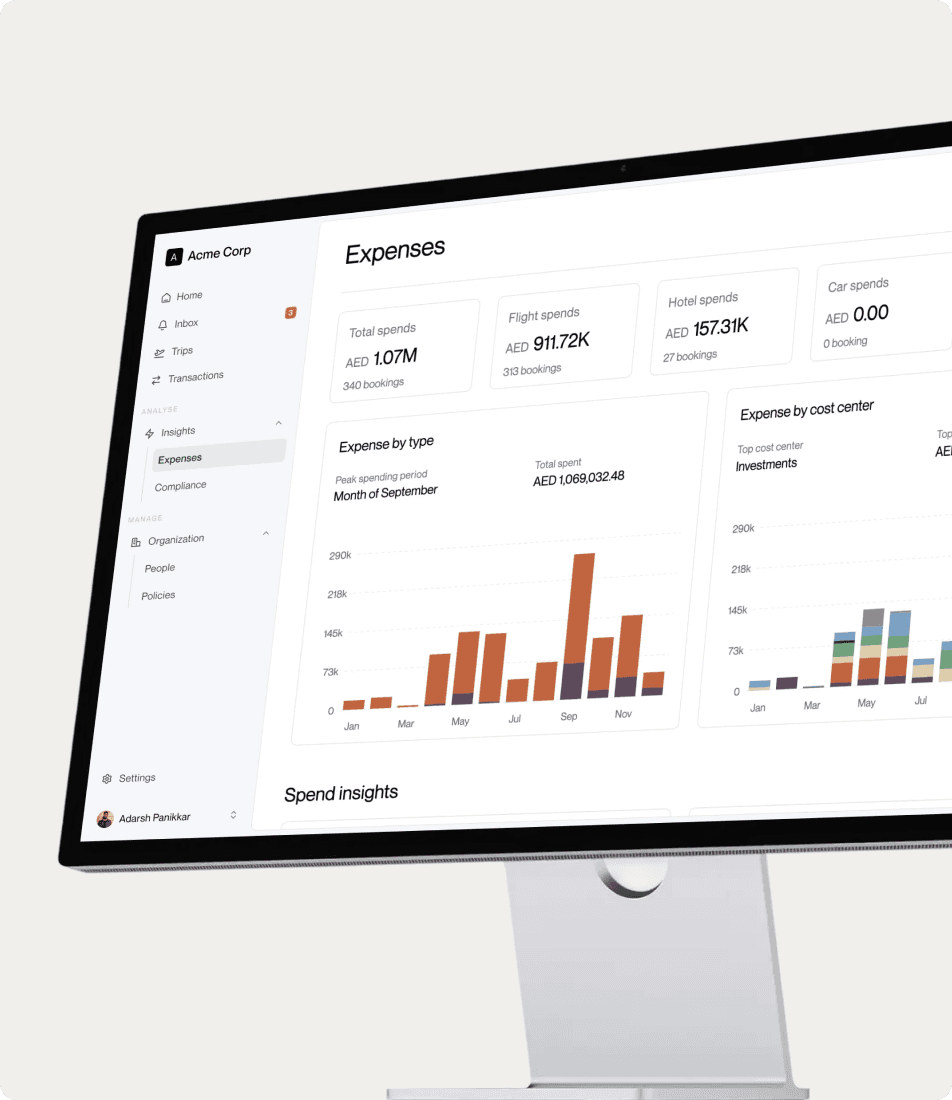
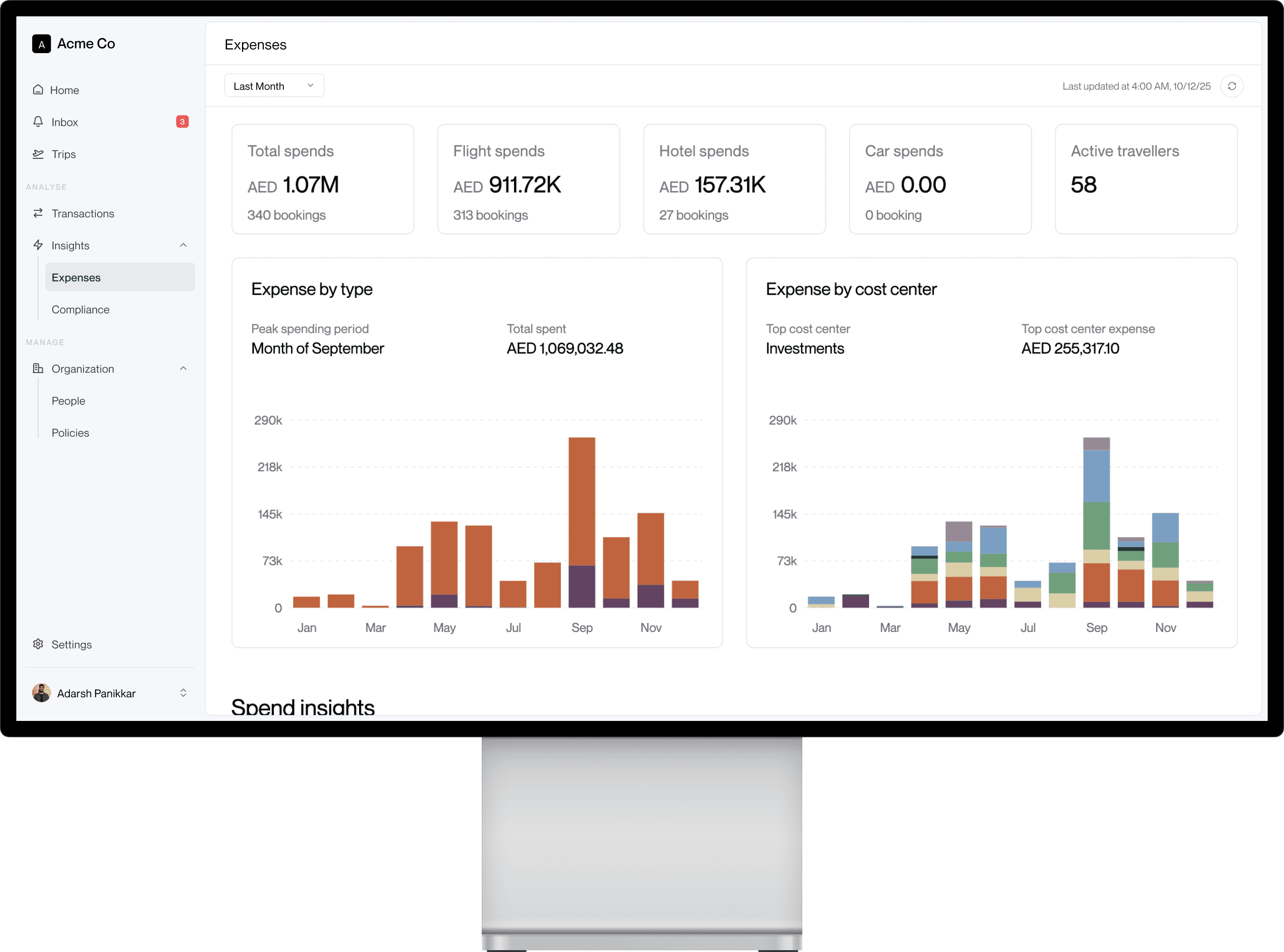
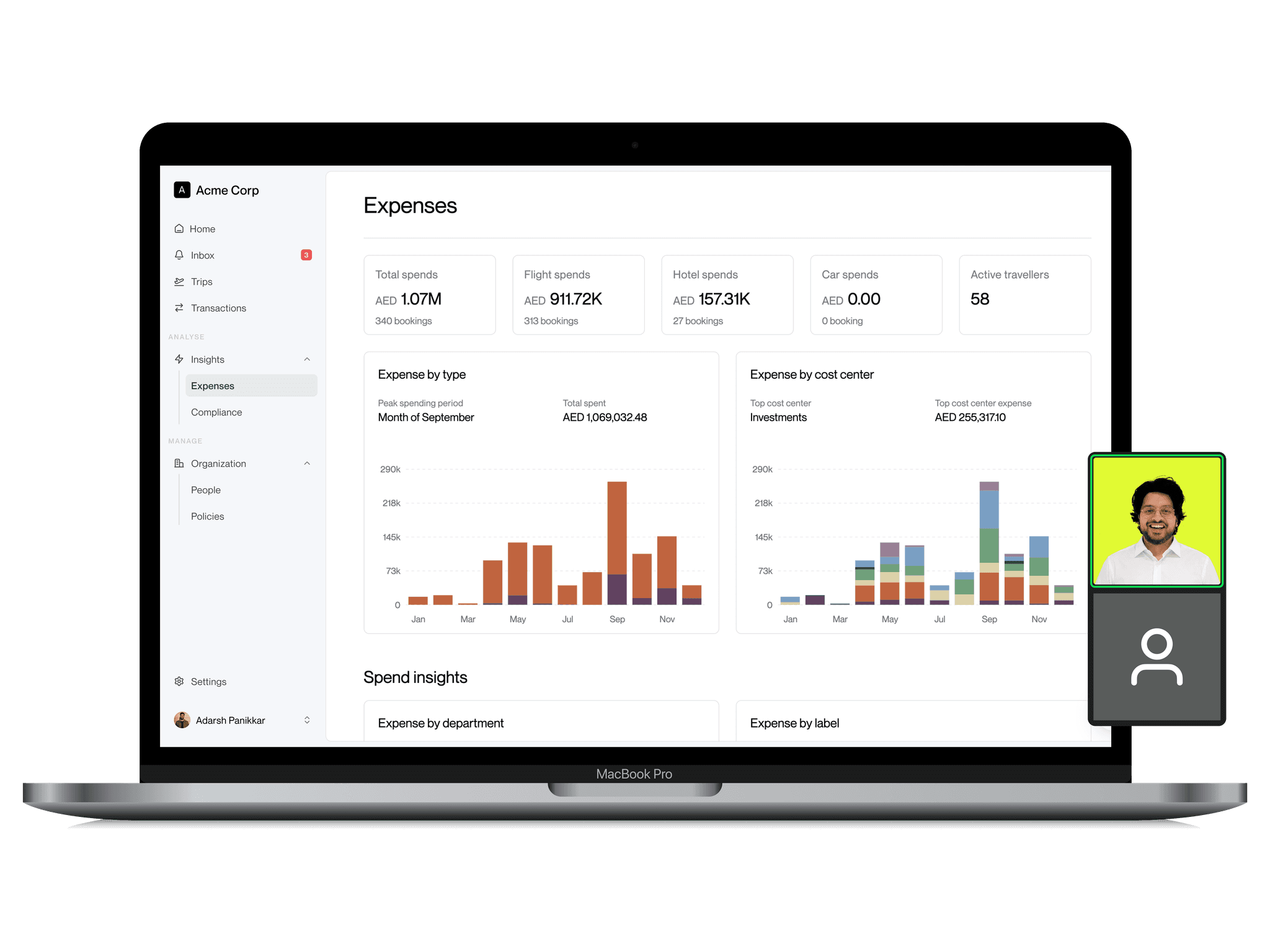
100% real-time spend visibility. Say goodbye to 30 days lags.

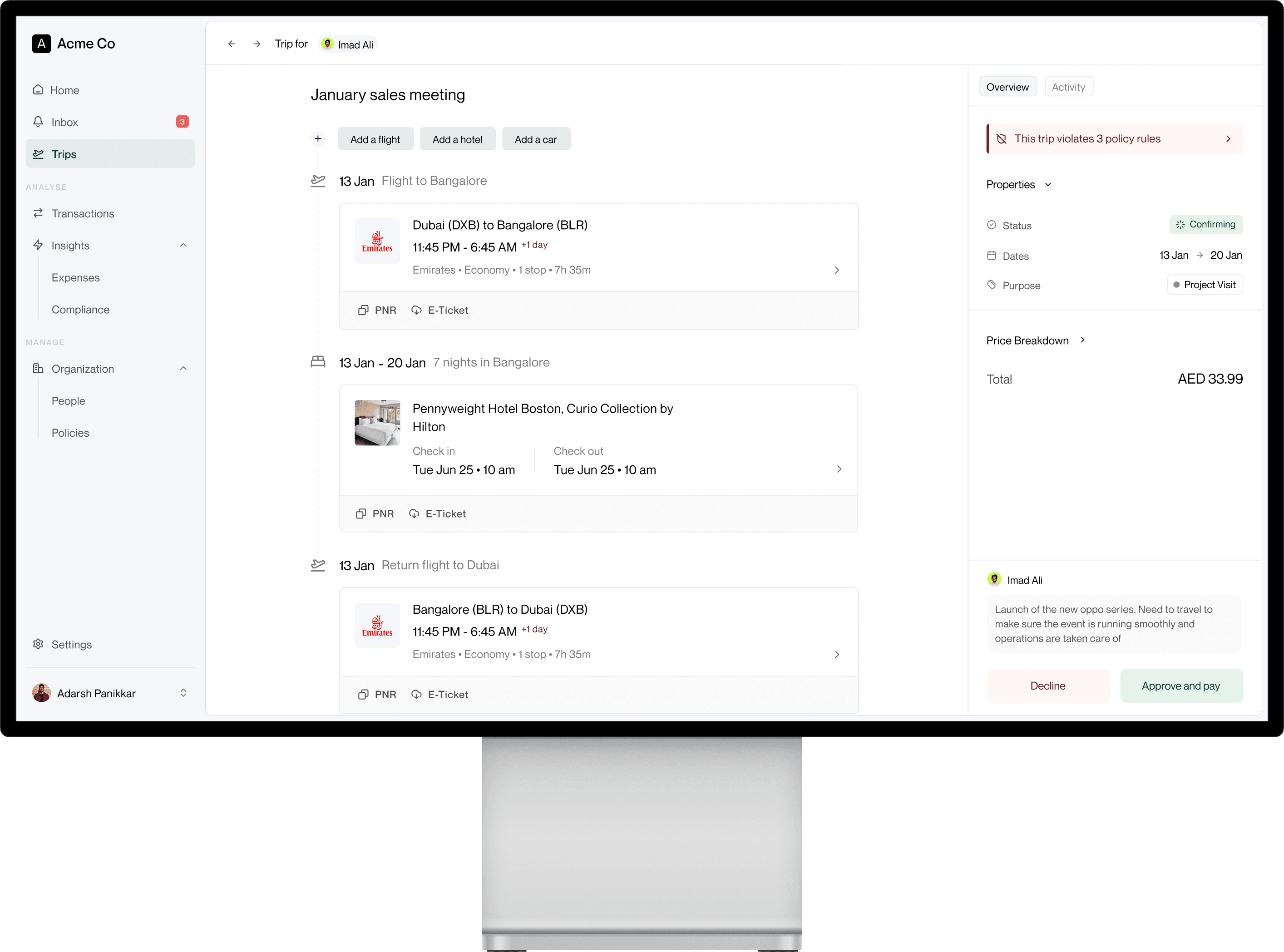
Know bookings follow fare rules, teams aren’t gaming the system, and finance can stand behind the numbers with confidence.

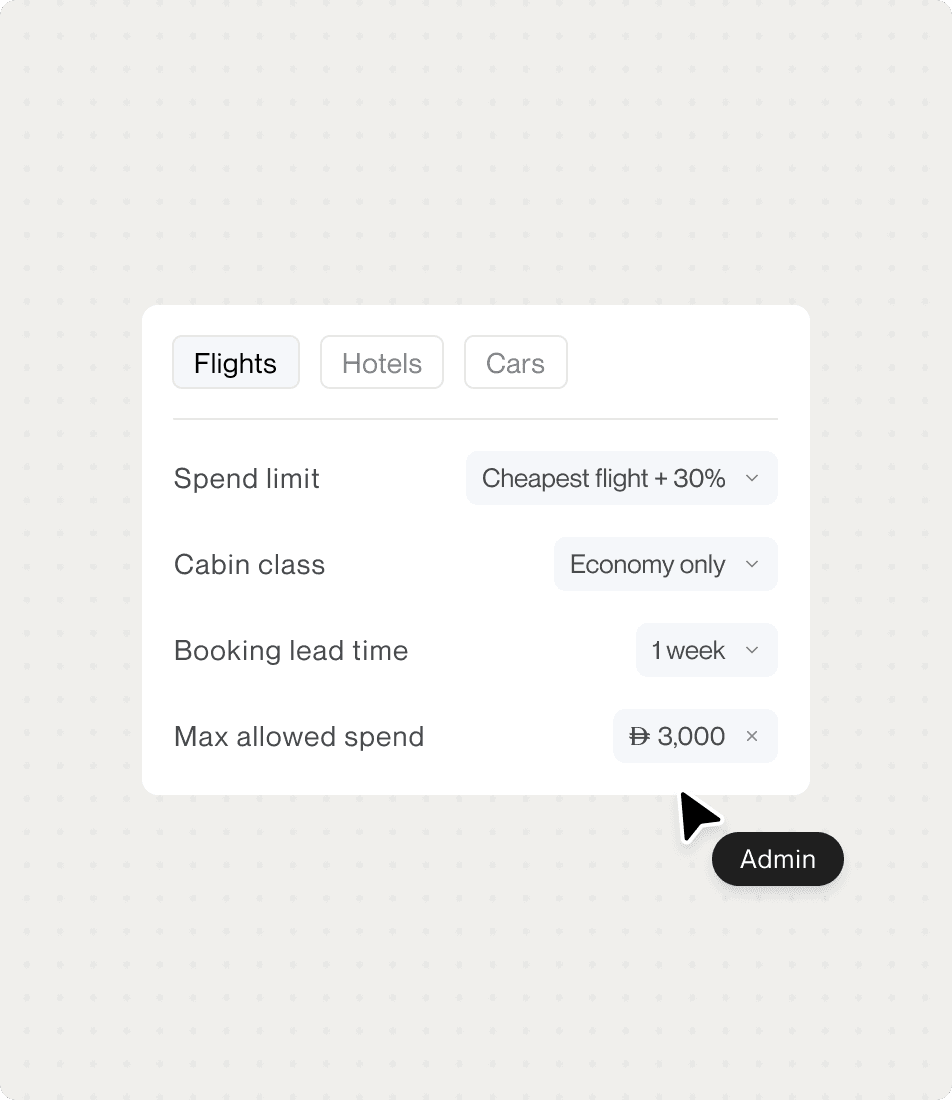
Always-on travel spend control

Define policies, limits, and approvals once. Kitt enforces them automatically on every booking — without slowing teams down.
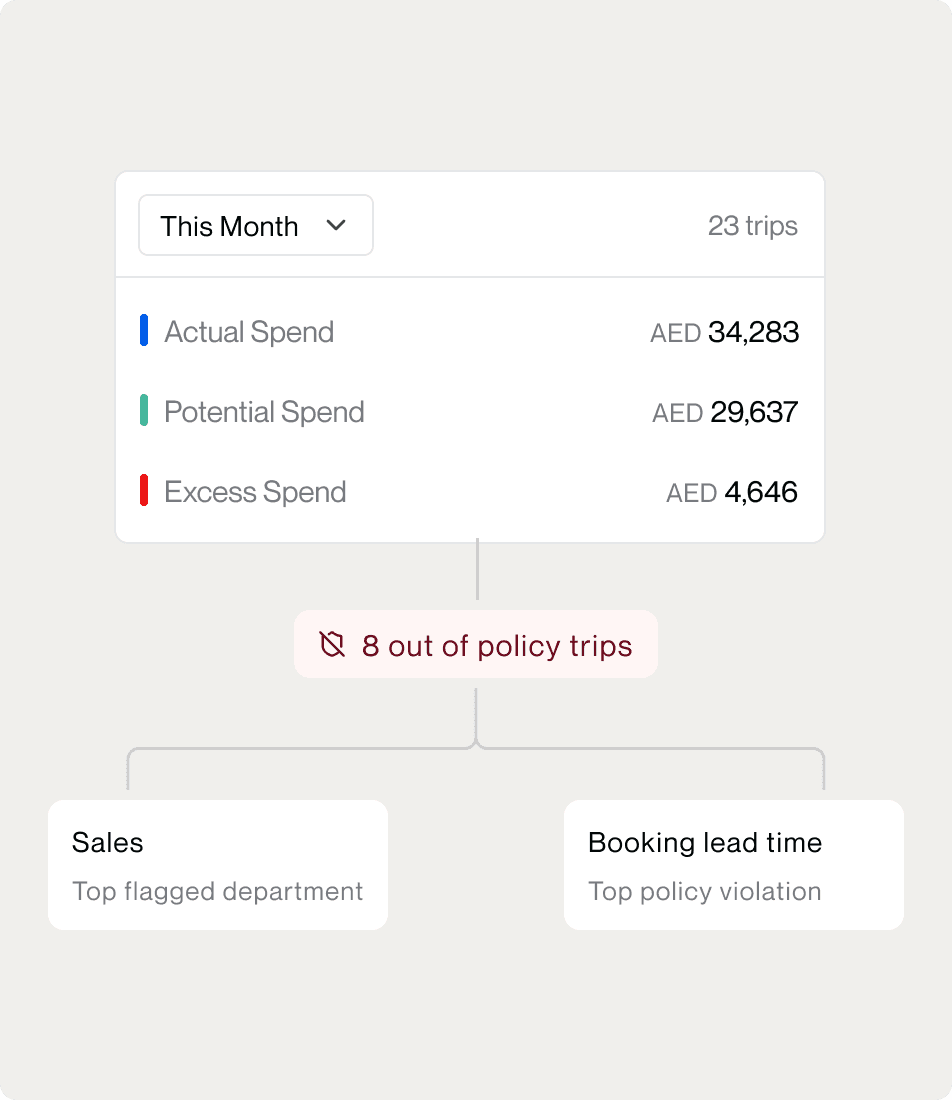
Track compliance in real-time without the admin work

See spend, compliance, and losses update live, so you catch issues early — not after the month closes.

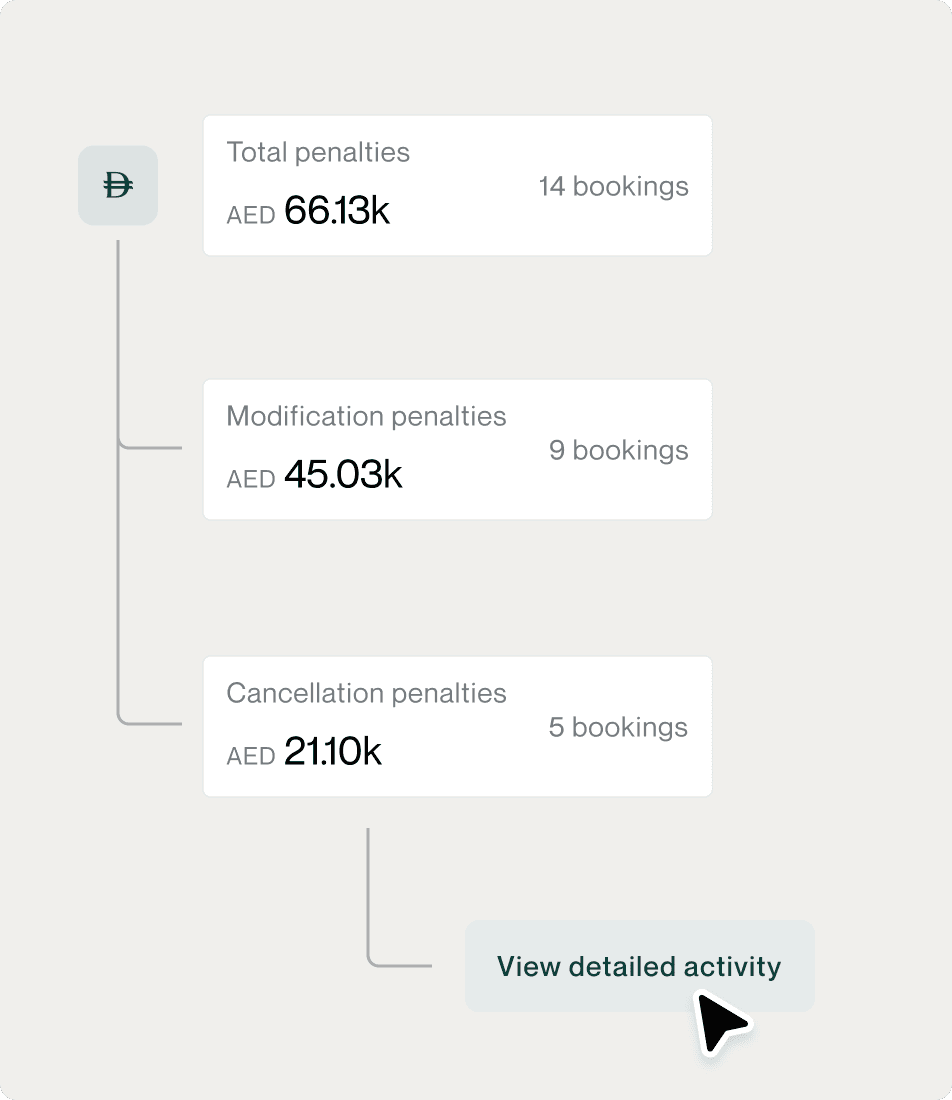
Reduce travel spend leakage

Track money lost to cancellations, changes, and repeated policy exceptions, and fix the patterns behind them.

Frequently Asked Questions

Frequently Asked Questions

Frequently Asked Questions

How does Kitt give me predictable travel spend?

Travel is unpredictable by nature—but with Kitt, your financial exposure isn't. You see every booking the moment it's confirmed, not weeks later when invoices arrive. Real-time accrual reporting means you always know your exact travel liability: what's booked, what's traveled, what's charged, and what's coming. No month-end surprises. No hidden costs. You can forecast with confidence because you're not guessing—you're looking at live data that updates with every booking.

Can I defend travel spend to the board with Kitt's data?

Yes. Every dirham has a story: who booked it, when they booked it, why it was approved (or auto-approved per policy), which cost center it hit, and full audit trails with receipts. When the board asks "Why did travel spend jump 22% in Q2?", you don't scramble through spreadsheets—you pull a report showing exactly which departments expanded, which routes drove costs, and whether it tracked with revenue growth. Kitt gives you defensible numbers backed by complete data lineage, not approximations.

What does "always-on travel spend control" actually mean?

Traditional controls are reactive—you review spend after it happens and try to prevent next time. Kitt's controls are proactive and continuous: policies enforce themselves at booking time (before money is spent), budget alerts fire when you're at 80% (not 110%), and compliance monitoring catches pattern violations immediately (not during quarterly audits). It's the difference between a locked door and an alarm that goes off after someone's already inside. Your controls work 24/7 without requiring constant oversight.

How do I know employees aren't gaming the system or policy exceptions?

Kitt's autonomous compliance engine flags unusual patterns automatically: repeated policy violations by the same employee, departments with abnormally high exception rates, bookings that technically comply but seem suspicious (e.g., booking premium economy repeatedly when policy allows "economy or business class"), and booking behavior changes after policy updates. You get alerts, not forensic accounting projects. Plus, every approval decision is logged with justification—if someone's rubber-stamping exceptions, you'll see it in the data.

What is "travel spend leakage" and how much does it typically cost?

Travel leakage is money lost to friction, not fraud: unused tickets from cancellations that didn't get refunded, change fees from poor planning, premium fares from last-minute bookings, out-of-policy spend that slipped through manual approvals, and vendor overcharges that went unnoticed. Most mid-size companies leak 10-18% of their travel budget this way—often AED 50,000-150,000 annually for a 200-person company. Kitt identifies leakage sources in real-time and shows you exactly where to tighten processes.

What's my actual ROI timeline with Kitt?

Most CFOs see measurable impact within 60 days: 15-25% reduction in average per-trip costs (from policy enforcement and advance booking), 80-120 hours/month of finance team time reclaimed (from automation), 100% real-time visibility (vs. 30-45 day lag with traditional agencies), and elimination of surprise invoices (cash flow predictability). At 10-30 bookings/month, Kitt typically generates 3-5x ROI in savings and efficiency gains in the first year—and that compounds as your travel volume grows.

How does Kitt help me justify travel spend to department heads?

Give every department head visibility into their own team's travel: who's traveling most, what it's costing, how they compare to other departments, and where they're non-compliant. When Sales says "We need more budget," you can show them "You're at 140% of budget because 45% of your bookings are within 7 days of travel—here's what it would cost if you planned better." Data shifts conversations from arguments to problem-solving. Departments become accountable for their own spend behavior when they can see it clearly.
How does Kitt give me predictable travel spend?

Travel is unpredictable by nature—but with Kitt, your financial exposure isn't. You see every booking the moment it's confirmed, not weeks later when invoices arrive. Real-time accrual reporting means you always know your exact travel liability: what's booked, what's traveled, what's charged, and what's coming. No month-end surprises. No hidden costs. You can forecast with confidence because you're not guessing—you're looking at live data that updates with every booking.

Can I defend travel spend to the board with Kitt's data?

Yes. Every dirham has a story: who booked it, when they booked it, why it was approved (or auto-approved per policy), which cost center it hit, and full audit trails with receipts. When the board asks "Why did travel spend jump 22% in Q2?", you don't scramble through spreadsheets—you pull a report showing exactly which departments expanded, which routes drove costs, and whether it tracked with revenue growth. Kitt gives you defensible numbers backed by complete data lineage, not approximations.

What does "always-on travel spend control" actually mean?

Traditional controls are reactive—you review spend after it happens and try to prevent next time. Kitt's controls are proactive and continuous: policies enforce themselves at booking time (before money is spent), budget alerts fire when you're at 80% (not 110%), and compliance monitoring catches pattern violations immediately (not during quarterly audits). It's the difference between a locked door and an alarm that goes off after someone's already inside. Your controls work 24/7 without requiring constant oversight.

How do I know employees aren't gaming the system or policy exceptions?

Kitt's autonomous compliance engine flags unusual patterns automatically: repeated policy violations by the same employee, departments with abnormally high exception rates, bookings that technically comply but seem suspicious (e.g., booking premium economy repeatedly when policy allows "economy or business class"), and booking behavior changes after policy updates. You get alerts, not forensic accounting projects. Plus, every approval decision is logged with justification—if someone's rubber-stamping exceptions, you'll see it in the data.

What is "travel spend leakage" and how much does it typically cost?

Travel leakage is money lost to friction, not fraud: unused tickets from cancellations that didn't get refunded, change fees from poor planning, premium fares from last-minute bookings, out-of-policy spend that slipped through manual approvals, and vendor overcharges that went unnoticed. Most mid-size companies leak 10-18% of their travel budget this way—often AED 50,000-150,000 annually for a 200-person company. Kitt identifies leakage sources in real-time and shows you exactly where to tighten processes.

What's my actual ROI timeline with Kitt?

Most CFOs see measurable impact within 60 days: 15-25% reduction in average per-trip costs (from policy enforcement and advance booking), 80-120 hours/month of finance team time reclaimed (from automation), 100% real-time visibility (vs. 30-45 day lag with traditional agencies), and elimination of surprise invoices (cash flow predictability). At 10-30 bookings/month, Kitt typically generates 3-5x ROI in savings and efficiency gains in the first year—and that compounds as your travel volume grows.

How does Kitt help me justify travel spend to department heads?

Give every department head visibility into their own team's travel: who's traveling most, what it's costing, how they compare to other departments, and where they're non-compliant. When Sales says "We need more budget," you can show them "You're at 140% of budget because 45% of your bookings are within 7 days of travel—here's what it would cost if you planned better." Data shifts conversations from arguments to problem-solving. Departments become accountable for their own spend behavior when they can see it clearly.

How does Kitt give me predictable travel spend?

Travel is unpredictable by nature—but with Kitt, your financial exposure isn't. You see every booking the moment it's confirmed, not weeks later when invoices arrive. Real-time accrual reporting means you always know your exact travel liability: what's booked, what's traveled, what's charged, and what's coming. No month-end surprises. No hidden costs. You can forecast with confidence because you're not guessing—you're looking at live data that updates with every booking.

Can I defend travel spend to the board with Kitt's data?

Yes. Every dirham has a story: who booked it, when they booked it, why it was approved (or auto-approved per policy), which cost center it hit, and full audit trails with receipts. When the board asks "Why did travel spend jump 22% in Q2?", you don't scramble through spreadsheets—you pull a report showing exactly which departments expanded, which routes drove costs, and whether it tracked with revenue growth. Kitt gives you defensible numbers backed by complete data lineage, not approximations.

What does "always-on travel spend control" actually mean?

Traditional controls are reactive—you review spend after it happens and try to prevent next time. Kitt's controls are proactive and continuous: policies enforce themselves at booking time (before money is spent), budget alerts fire when you're at 80% (not 110%), and compliance monitoring catches pattern violations immediately (not during quarterly audits). It's the difference between a locked door and an alarm that goes off after someone's already inside. Your controls work 24/7 without requiring constant oversight.

How do I know employees aren't gaming the system or policy exceptions?

Kitt's autonomous compliance engine flags unusual patterns automatically: repeated policy violations by the same employee, departments with abnormally high exception rates, bookings that technically comply but seem suspicious (e.g., booking premium economy repeatedly when policy allows "economy or business class"), and booking behavior changes after policy updates. You get alerts, not forensic accounting projects. Plus, every approval decision is logged with justification—if someone's rubber-stamping exceptions, you'll see it in the data.

What is "travel spend leakage" and how much does it typically cost?

Travel leakage is money lost to friction, not fraud: unused tickets from cancellations that didn't get refunded, change fees from poor planning, premium fares from last-minute bookings, out-of-policy spend that slipped through manual approvals, and vendor overcharges that went unnoticed. Most mid-size companies leak 10-18% of their travel budget this way—often AED 50,000-150,000 annually for a 200-person company. Kitt identifies leakage sources in real-time and shows you exactly where to tighten processes.

What's my actual ROI timeline with Kitt?

Most CFOs see measurable impact within 60 days: 15-25% reduction in average per-trip costs (from policy enforcement and advance booking), 80-120 hours/month of finance team time reclaimed (from automation), 100% real-time visibility (vs. 30-45 day lag with traditional agencies), and elimination of surprise invoices (cash flow predictability). At 10-30 bookings/month, Kitt typically generates 3-5x ROI in savings and efficiency gains in the first year—and that compounds as your travel volume grows.

How does Kitt help me justify travel spend to department heads?

Give every department head visibility into their own team's travel: who's traveling most, what it's costing, how they compare to other departments, and where they're non-compliant. When Sales says "We need more budget," you can show them "You're at 140% of budget because 45% of your bookings are within 7 days of travel—here's what it would cost if you planned better." Data shifts conversations from arguments to problem-solving. Departments become accountable for their own spend behavior when they can see it clearly.

Schedule a live 30 minute demo

Schedule a live 30 minute demo

Experience Kitt with a live, expert-run tour of the platform.

Experience Kitt with a live, expert-run tour of the platform.