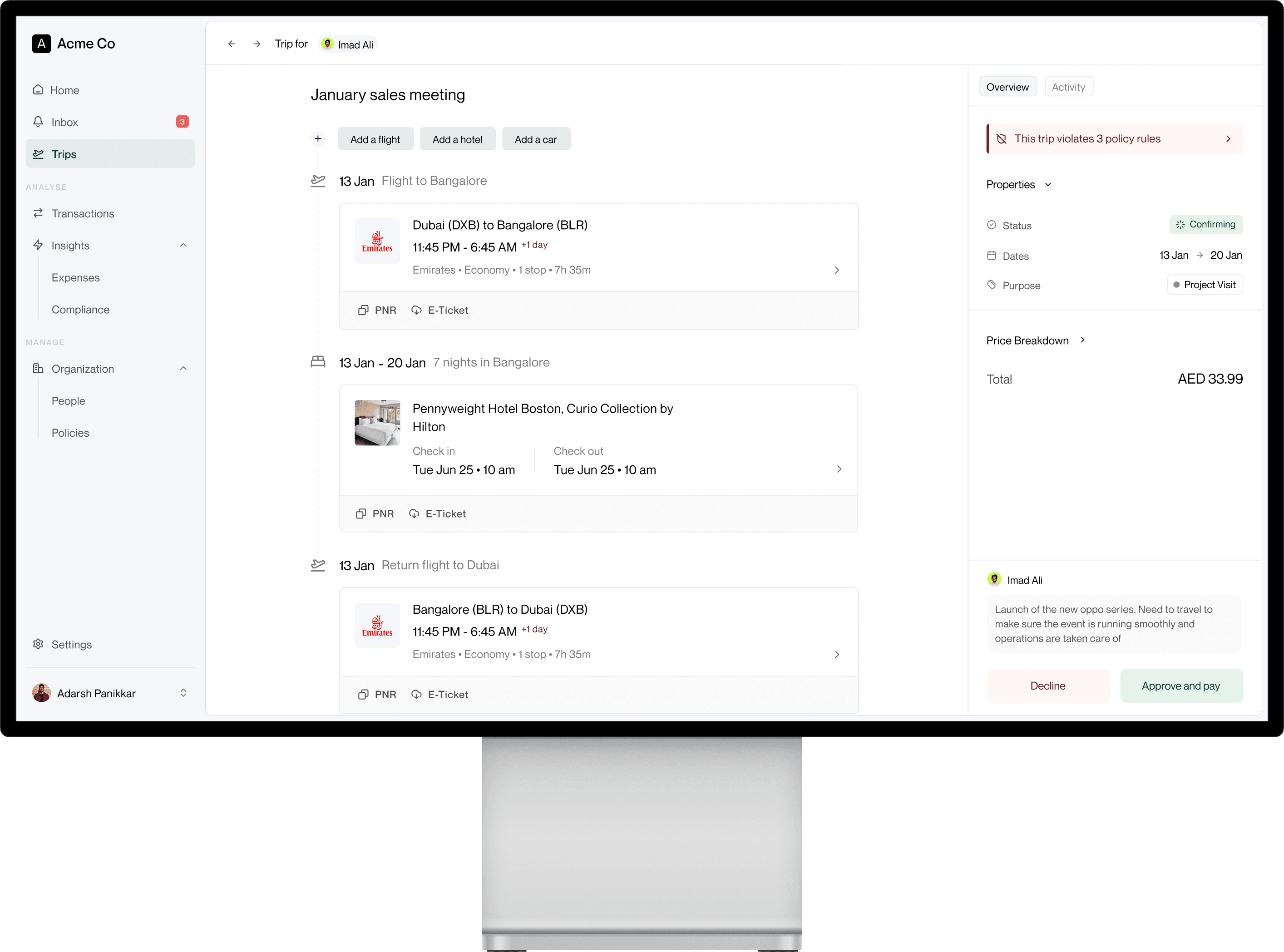

Control travel spend without slowing teams down

Set clear rules once, and let Kitt enforce them automatically — across every trip, team, and budget.

Control travel spend without slowing teams down

Set clear rules once, and let Kitt enforce them automatically — across every trip, team, and budget.

Control travel spend without slowing teams down

Set clear rules once, and let Kitt enforce them automatically — across every trip, team, and budget.

Powered by the world's best

Built-in guardrails. Easy to setup and monitor.

Define your travel policies and approval flows once, then let automation handle enforcement
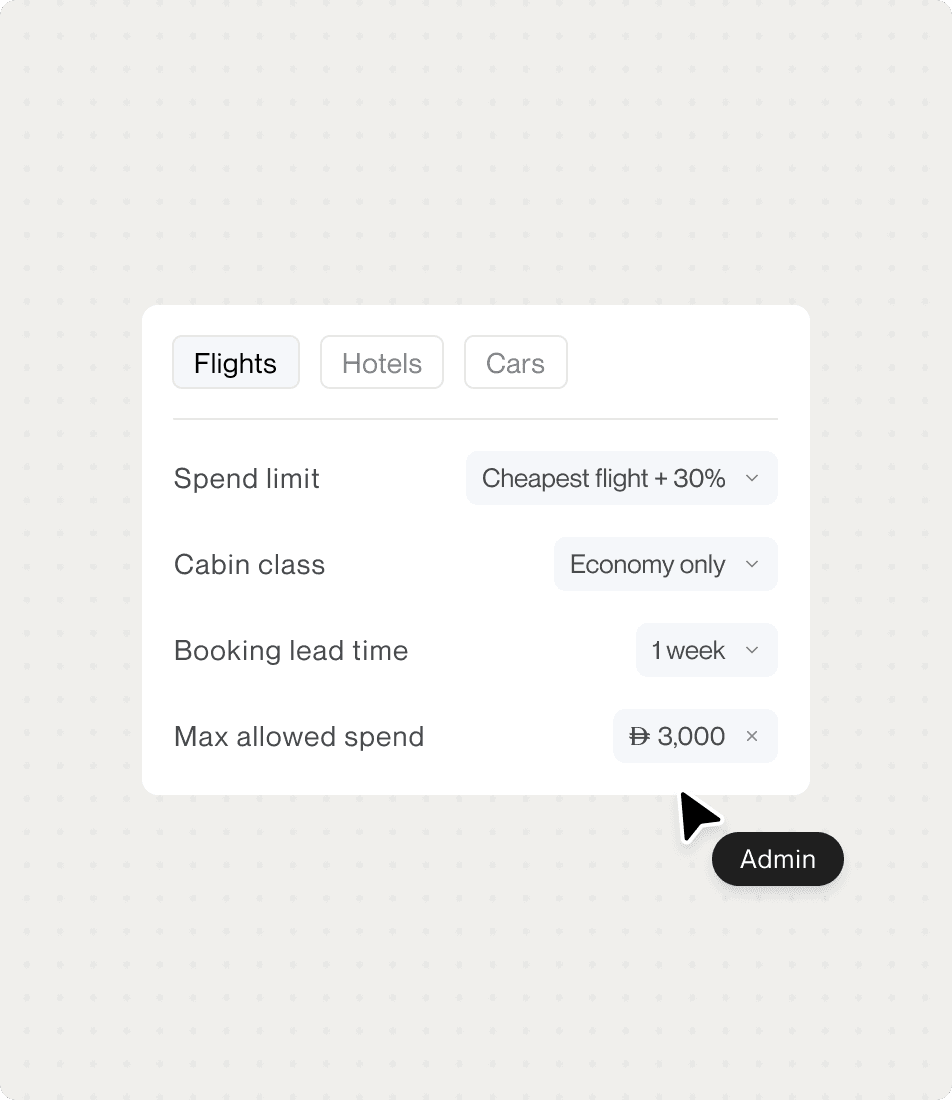
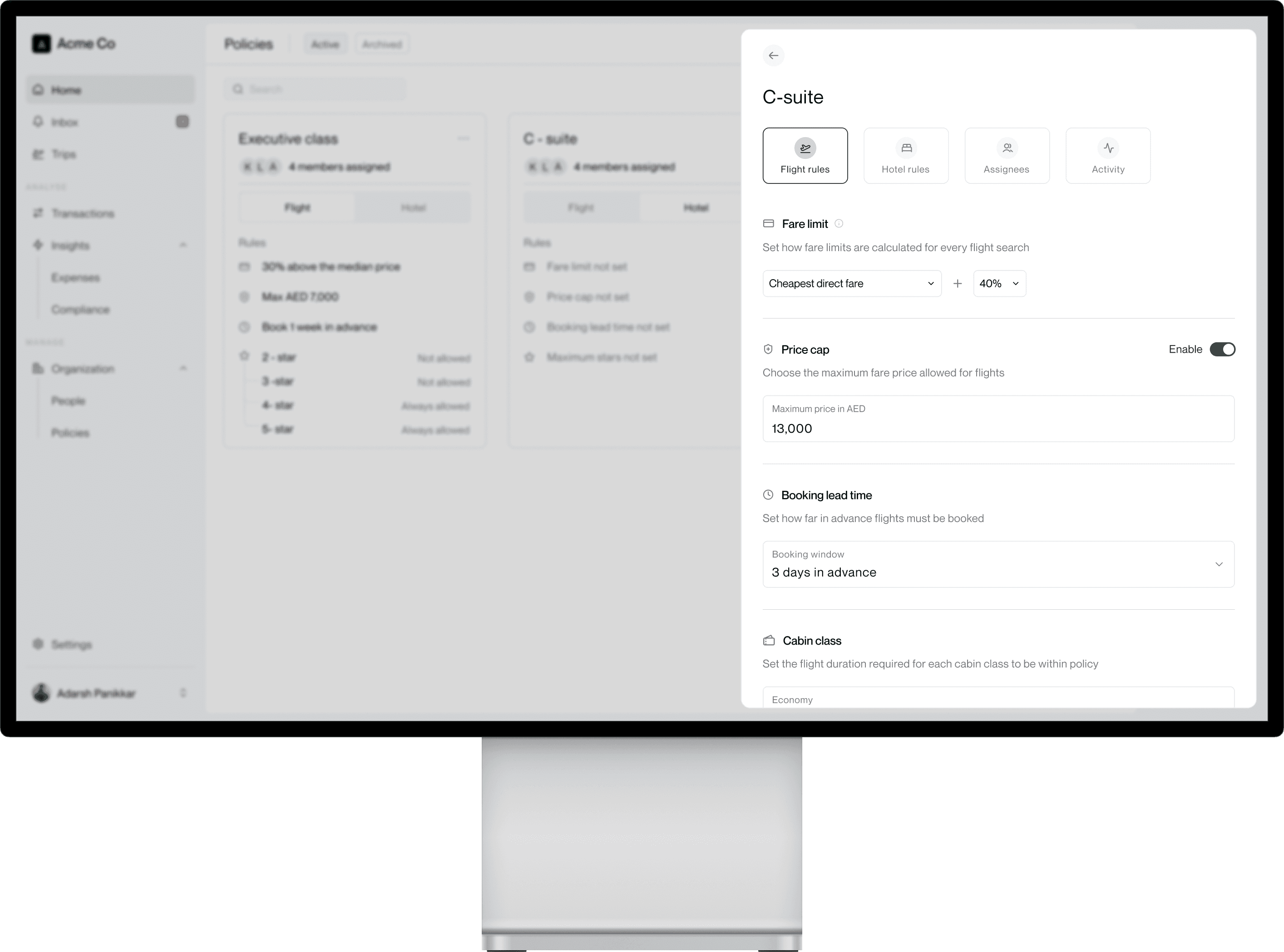
Define the rules. We enforce them.

Define spend limits, cabin classes, booking windows, and approvals once. Kitt applies them automatically at booking.

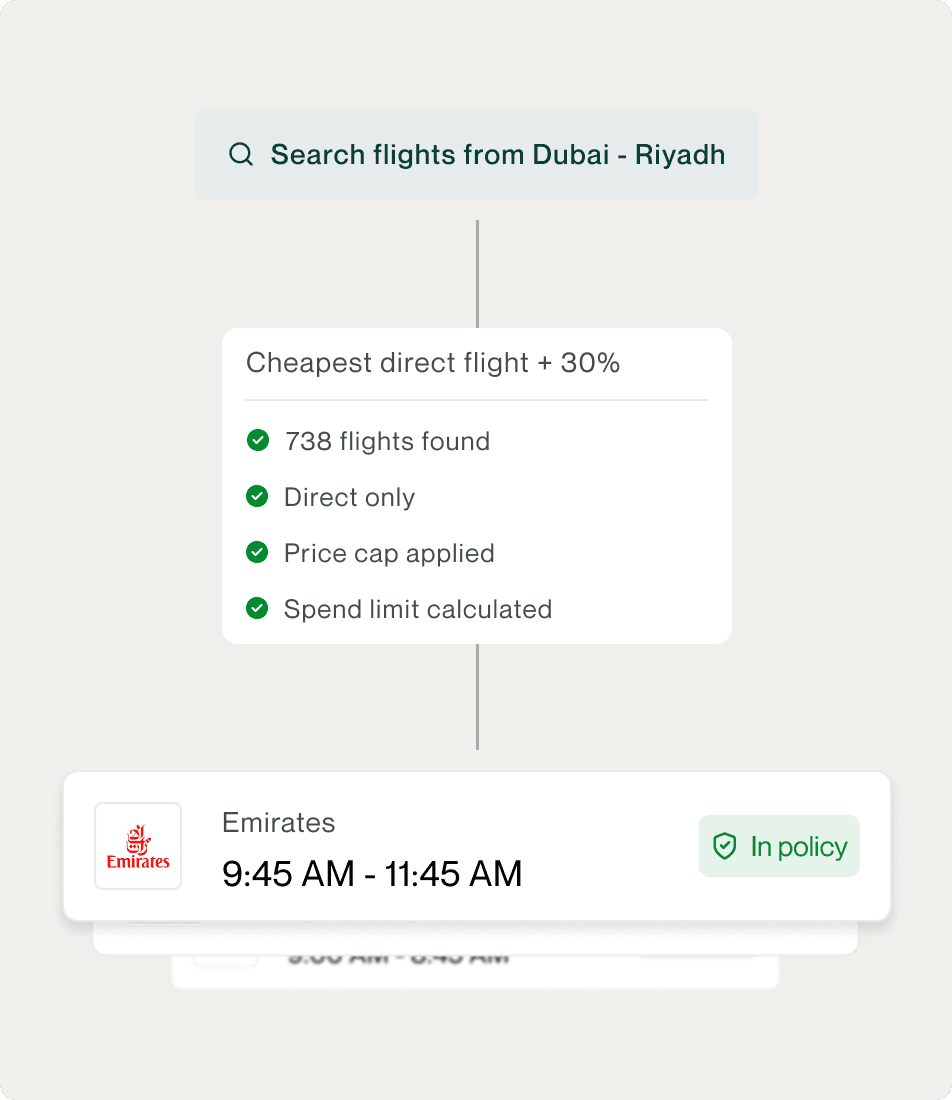
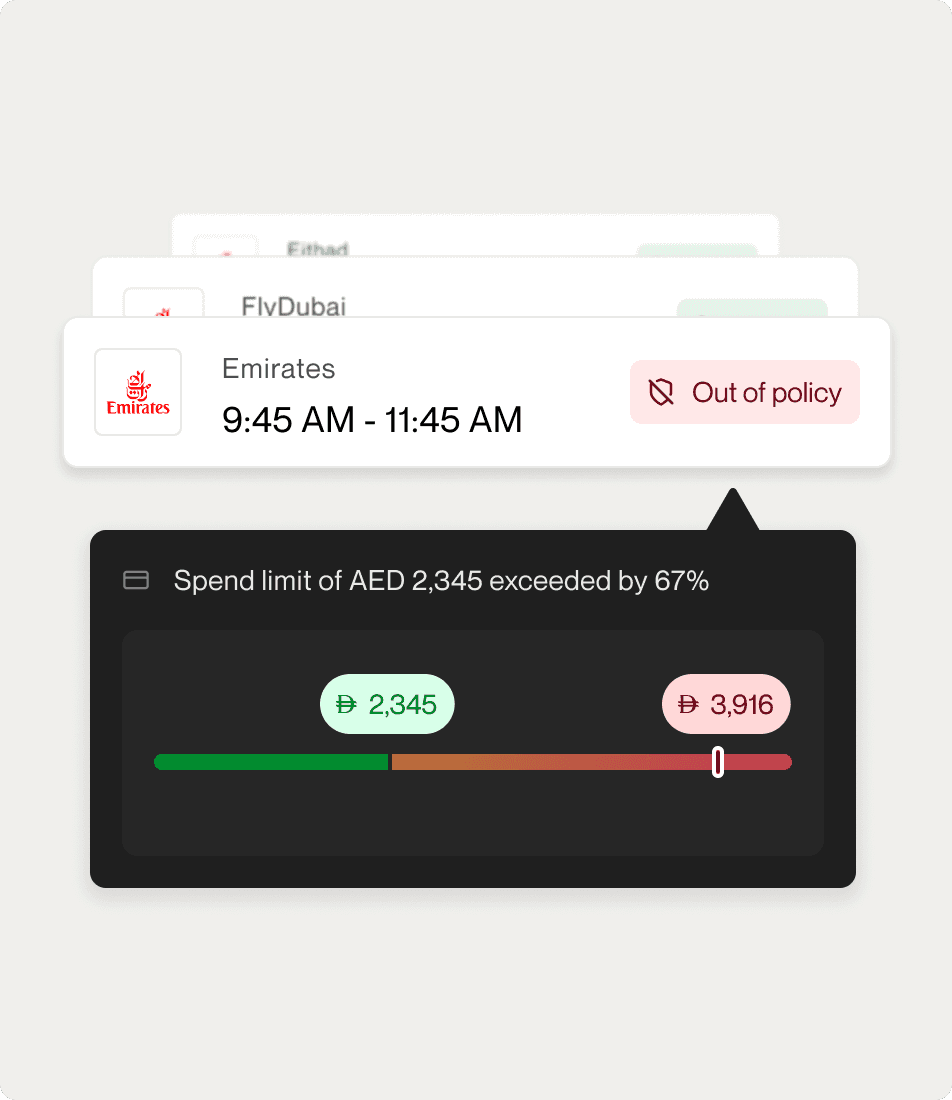
Smart spend limits that adjust to every search

Each search scans live inventory and sets a fair spend limit based on your rules, routes, and timing — not static caps.
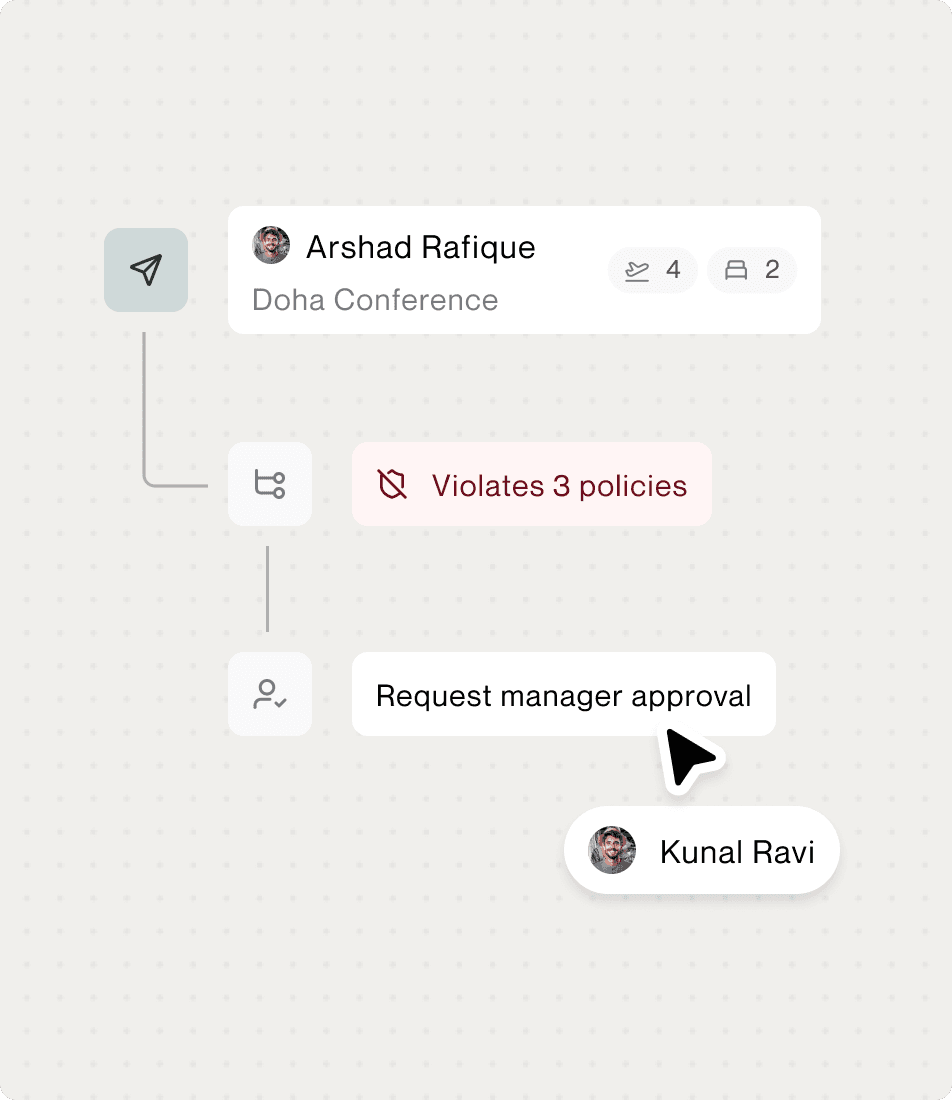
Custom approval workflows, your way

Set flexible approval flows by team, role, or spend — Kitt routes each trip automatically based on your rules.

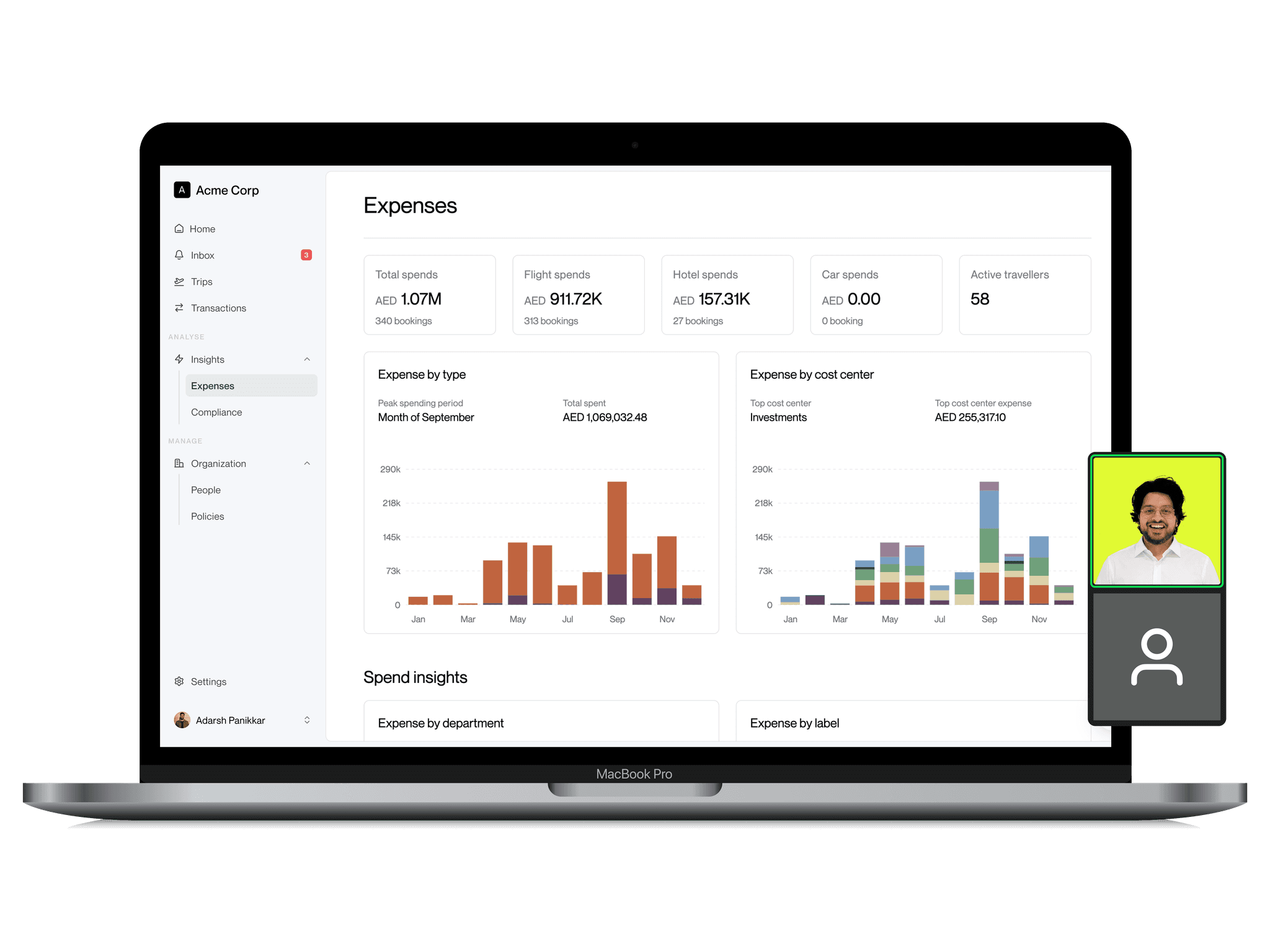
Control without micromanagement

Policies run quietly in the background, so teams move fast and finance stays confident — without reviewing every booking.
Frequently Asked Questions

Frequently Asked Questions

Frequently Asked Questions

How do travel policies work on Kitt?

Instead of PDF documents that employees ignore, your travel policy lives inside Kitt as automated rules that enforce themselves in real-time. You set your preferences once—things like budget buffers, booking windows, and cabin class rules—and Kitt does the rest. The key difference from traditional policies? Dynamic spend limits. Rather than static caps that don't reflect market reality, Kitt calculates acceptable prices for every search based on live market data. For a Dubai-London flight, it might find the best available option is AED 1,200 and set your limit at AED 1,380 (if you chose a 15% buffer). Next week, if prices jump to AED 1,800, your limit adjusts automatically to AED 2,070. This works across flights, hotels, and cars—policies adapt to market conditions so they're always fair, never outdated, and employees know exactly what's allowed before they click book. Out-of-policy options are flagged clearly, and approval requests route automatically. No guesswork, no spreadsheets, no chasing receipts.

What are "smart spend limits" and how do they work?

Unlike static caps that don't account for route or market conditions, Kitt's smart spend limits calculate acceptable prices dynamically for every search based on real-time market data. Example - Flights: Your policy says "cheapest direct flight + 15% buffer." An employee searches Dubai to London. Kitt scans all available direct flights, finds the cheapest at AED 1,200, and sets the policy limit at AED 1,380 (1,200 + 15%). Flights above that are flagged as out-of-policy. The next week, if the cheapest direct is AED 1,500, the limit automatically adjusts to AED 1,725. Example - Hotels: Your policy says "median nightly rate + 20% buffer." For hotels in downtown Dubai on those dates, Kitt calculates the median at AED 650, so the policy limit is AED 780. Hotels above that require approval. In Abu Dhabi, the median might be AED 450, so the limit adjusts to AED 540. The limits are fair, data-driven, and route-specific—preventing both overspend and unnecessarily restrictive caps that frustrate employees.

Can we set different policies for different departments or seniority levels?

Yes. Kitt supports unlimited policy tiers based on role, department, seniority, or any custom criteria. Examples: Flights: C-suite: "Cheapest direct + 30% buffer, business class allowed on all flights over 3 hours" Managers: "Cheapest direct + 15% buffer, business class allowed on flights over 6 hours" Staff: "Cheapest flight including layovers + 10% buffer, economy only" Hotels: Sales team: "Median rate + 25% buffer, max 5-star hotels" (client-facing) Operations: "Median rate + 10% buffer, max 4-star hotels" (internal meetings) Cars: Executives: "Cheapest luxury + 20% buffer" General staff: "Cheapest compact + 10% buffer" The platform automatically applies the right policy based on who's booking—no manual tracking needed.

How granular can travel policies get?

Very granular. Here are real policy configurations you can set in Kitt: Flights: Buffer: "Cheapest direct + 15%" or "Cheapest flight including layovers + 10%" Booking lead time: "Must book minimum 14 days in advance" (with exceptions for emergencies) Price cap: "No flight over AED 5,000 without approval" Cabin class: "Economy default, business class allowed if journey over 6 hours" or "Business class allowed for VP+ only" Hotels: Buffer: "Median nightly rate + 20%" Booking lead time: "Must book minimum 7 days in advance" Price cap: "No hotel over AED 1,200/night without approval" Star rating: "Maximum 4-star hotels" (with exceptions for client-facing travel) Cars: Buffer: "Cheapest compact + 15%" or "Cheapest SUV + 10%" Booking lead time: "Must book minimum 3 days in advance" Price cap: "No rental over AED 300/day without approval" You can mix and match these parameters to create policies that reflect how your business actually operates.

What if someone needs to book outside the policy—like business class for a long flight?

Kitt handles exceptions intelligently based on your policy rules. Example: Your policy says "Economy default, but business class allowed if journey is over 6 hours." When an employee searches for a 7-hour Dubai-to-London flight and selects business class, Kitt automatically approves it because it meets your exception criteria—no manual approval needed. But if they select business class on a 4-hour flight, Kitt flags it: "This cabin class exceeds your policy. Request approval to proceed." They can add justification (e.g., "Red-eye flight, need to work on arrival"), and it routes to their manager for one-click approval. You set the exception rules once, and Kitt enforces them consistently across all bookings—no more subjective decisions or policy confusion.

What happens if market prices spike—will employees get stuck?

No. Because Kitt uses percentage buffers on live market data, your policies automatically adjust when prices rise. Example: Your policy is "cheapest direct flight + 15% buffer." In January, cheapest direct Dubai-London is AED 1,200 → Limit is AED 1,380 In December (peak season), cheapest direct is AED 2,500 → Limit automatically adjusts to AED 2,875 Your policy stays fair and functional regardless of seasonality, demand spikes, or market changes. You're not locked into outdated static caps that force employees to request approval for normal market conditions. If you want additional protection against extreme spikes, you can add a price cap: "Cheapest direct + 15% buffer, but flag anything over AED 3,500 for review."

How does automated policy enforcement save money compared to manual approval?

Manual approval processes have hidden costs: approval delays cause employees to book last-minute at premium prices, human error lets non-compliant bookings slip through, and managers waste time reviewing obvious bookings. Kitt's automated enforcement eliminates these inefficiencies: 95%+ policy compliance (vs. 60-70% with manual processes) because rules are clear and enforced at search time 15-25% lower average fares because percentage buffers encourage employees to find cheaper base fares to maximize their buffer Zero approval time for in-policy bookings—employees book and go Instant exception handling for out-of-policy bookings—no email chains or lost requests Companies typically see 20-35% travel spend reduction in the first year—not from restrictive policies, but from consistent enforcement, better booking behavior, and advance booking compliance driven by clear lead-time rules.
How do travel policies work on Kitt?

Instead of PDF documents that employees ignore, your travel policy lives inside Kitt as automated rules that enforce themselves in real-time. You set your preferences once—things like budget buffers, booking windows, and cabin class rules—and Kitt does the rest. The key difference from traditional policies? Dynamic spend limits. Rather than static caps that don't reflect market reality, Kitt calculates acceptable prices for every search based on live market data. For a Dubai-London flight, it might find the best available option is AED 1,200 and set your limit at AED 1,380 (if you chose a 15% buffer). Next week, if prices jump to AED 1,800, your limit adjusts automatically to AED 2,070. This works across flights, hotels, and cars—policies adapt to market conditions so they're always fair, never outdated, and employees know exactly what's allowed before they click book. Out-of-policy options are flagged clearly, and approval requests route automatically. No guesswork, no spreadsheets, no chasing receipts.

What are "smart spend limits" and how do they work?

Unlike static caps that don't account for route or market conditions, Kitt's smart spend limits calculate acceptable prices dynamically for every search based on real-time market data. Example - Flights: Your policy says "cheapest direct flight + 15% buffer." An employee searches Dubai to London. Kitt scans all available direct flights, finds the cheapest at AED 1,200, and sets the policy limit at AED 1,380 (1,200 + 15%). Flights above that are flagged as out-of-policy. The next week, if the cheapest direct is AED 1,500, the limit automatically adjusts to AED 1,725. Example - Hotels: Your policy says "median nightly rate + 20% buffer." For hotels in downtown Dubai on those dates, Kitt calculates the median at AED 650, so the policy limit is AED 780. Hotels above that require approval. In Abu Dhabi, the median might be AED 450, so the limit adjusts to AED 540. The limits are fair, data-driven, and route-specific—preventing both overspend and unnecessarily restrictive caps that frustrate employees.

Can we set different policies for different departments or seniority levels?

Yes. Kitt supports unlimited policy tiers based on role, department, seniority, or any custom criteria. Examples: Flights: C-suite: "Cheapest direct + 30% buffer, business class allowed on all flights over 3 hours" Managers: "Cheapest direct + 15% buffer, business class allowed on flights over 6 hours" Staff: "Cheapest flight including layovers + 10% buffer, economy only" Hotels: Sales team: "Median rate + 25% buffer, max 5-star hotels" (client-facing) Operations: "Median rate + 10% buffer, max 4-star hotels" (internal meetings) Cars: Executives: "Cheapest luxury + 20% buffer" General staff: "Cheapest compact + 10% buffer" The platform automatically applies the right policy based on who's booking—no manual tracking needed.

How granular can travel policies get?

Very granular. Here are real policy configurations you can set in Kitt: Flights: Buffer: "Cheapest direct + 15%" or "Cheapest flight including layovers + 10%" Booking lead time: "Must book minimum 14 days in advance" (with exceptions for emergencies) Price cap: "No flight over AED 5,000 without approval" Cabin class: "Economy default, business class allowed if journey over 6 hours" or "Business class allowed for VP+ only" Hotels: Buffer: "Median nightly rate + 20%" Booking lead time: "Must book minimum 7 days in advance" Price cap: "No hotel over AED 1,200/night without approval" Star rating: "Maximum 4-star hotels" (with exceptions for client-facing travel) Cars: Buffer: "Cheapest compact + 15%" or "Cheapest SUV + 10%" Booking lead time: "Must book minimum 3 days in advance" Price cap: "No rental over AED 300/day without approval" You can mix and match these parameters to create policies that reflect how your business actually operates.

What if someone needs to book outside the policy—like business class for a long flight?

Kitt handles exceptions intelligently based on your policy rules. Example: Your policy says "Economy default, but business class allowed if journey is over 6 hours." When an employee searches for a 7-hour Dubai-to-London flight and selects business class, Kitt automatically approves it because it meets your exception criteria—no manual approval needed. But if they select business class on a 4-hour flight, Kitt flags it: "This cabin class exceeds your policy. Request approval to proceed." They can add justification (e.g., "Red-eye flight, need to work on arrival"), and it routes to their manager for one-click approval. You set the exception rules once, and Kitt enforces them consistently across all bookings—no more subjective decisions or policy confusion.

What happens if market prices spike—will employees get stuck?

No. Because Kitt uses percentage buffers on live market data, your policies automatically adjust when prices rise. Example: Your policy is "cheapest direct flight + 15% buffer." In January, cheapest direct Dubai-London is AED 1,200 → Limit is AED 1,380 In December (peak season), cheapest direct is AED 2,500 → Limit automatically adjusts to AED 2,875 Your policy stays fair and functional regardless of seasonality, demand spikes, or market changes. You're not locked into outdated static caps that force employees to request approval for normal market conditions. If you want additional protection against extreme spikes, you can add a price cap: "Cheapest direct + 15% buffer, but flag anything over AED 3,500 for review."

How does automated policy enforcement save money compared to manual approval?

Manual approval processes have hidden costs: approval delays cause employees to book last-minute at premium prices, human error lets non-compliant bookings slip through, and managers waste time reviewing obvious bookings. Kitt's automated enforcement eliminates these inefficiencies: 95%+ policy compliance (vs. 60-70% with manual processes) because rules are clear and enforced at search time 15-25% lower average fares because percentage buffers encourage employees to find cheaper base fares to maximize their buffer Zero approval time for in-policy bookings—employees book and go Instant exception handling for out-of-policy bookings—no email chains or lost requests Companies typically see 20-35% travel spend reduction in the first year—not from restrictive policies, but from consistent enforcement, better booking behavior, and advance booking compliance driven by clear lead-time rules.

How do travel policies work on Kitt?

Instead of PDF documents that employees ignore, your travel policy lives inside Kitt as automated rules that enforce themselves in real-time. You set your preferences once—things like budget buffers, booking windows, and cabin class rules—and Kitt does the rest. The key difference from traditional policies? Dynamic spend limits. Rather than static caps that don't reflect market reality, Kitt calculates acceptable prices for every search based on live market data. For a Dubai-London flight, it might find the best available option is AED 1,200 and set your limit at AED 1,380 (if you chose a 15% buffer). Next week, if prices jump to AED 1,800, your limit adjusts automatically to AED 2,070. This works across flights, hotels, and cars—policies adapt to market conditions so they're always fair, never outdated, and employees know exactly what's allowed before they click book. Out-of-policy options are flagged clearly, and approval requests route automatically. No guesswork, no spreadsheets, no chasing receipts.

What are "smart spend limits" and how do they work?

Unlike static caps that don't account for route or market conditions, Kitt's smart spend limits calculate acceptable prices dynamically for every search based on real-time market data. Example - Flights: Your policy says "cheapest direct flight + 15% buffer." An employee searches Dubai to London. Kitt scans all available direct flights, finds the cheapest at AED 1,200, and sets the policy limit at AED 1,380 (1,200 + 15%). Flights above that are flagged as out-of-policy. The next week, if the cheapest direct is AED 1,500, the limit automatically adjusts to AED 1,725. Example - Hotels: Your policy says "median nightly rate + 20% buffer." For hotels in downtown Dubai on those dates, Kitt calculates the median at AED 650, so the policy limit is AED 780. Hotels above that require approval. In Abu Dhabi, the median might be AED 450, so the limit adjusts to AED 540. The limits are fair, data-driven, and route-specific—preventing both overspend and unnecessarily restrictive caps that frustrate employees.

Can we set different policies for different departments or seniority levels?

Yes. Kitt supports unlimited policy tiers based on role, department, seniority, or any custom criteria. Examples: Flights: C-suite: "Cheapest direct + 30% buffer, business class allowed on all flights over 3 hours" Managers: "Cheapest direct + 15% buffer, business class allowed on flights over 6 hours" Staff: "Cheapest flight including layovers + 10% buffer, economy only" Hotels: Sales team: "Median rate + 25% buffer, max 5-star hotels" (client-facing) Operations: "Median rate + 10% buffer, max 4-star hotels" (internal meetings) Cars: Executives: "Cheapest luxury + 20% buffer" General staff: "Cheapest compact + 10% buffer" The platform automatically applies the right policy based on who's booking—no manual tracking needed.

How granular can travel policies get?

Very granular. Here are real policy configurations you can set in Kitt: Flights: Buffer: "Cheapest direct + 15%" or "Cheapest flight including layovers + 10%" Booking lead time: "Must book minimum 14 days in advance" (with exceptions for emergencies) Price cap: "No flight over AED 5,000 without approval" Cabin class: "Economy default, business class allowed if journey over 6 hours" or "Business class allowed for VP+ only" Hotels: Buffer: "Median nightly rate + 20%" Booking lead time: "Must book minimum 7 days in advance" Price cap: "No hotel over AED 1,200/night without approval" Star rating: "Maximum 4-star hotels" (with exceptions for client-facing travel) Cars: Buffer: "Cheapest compact + 15%" or "Cheapest SUV + 10%" Booking lead time: "Must book minimum 3 days in advance" Price cap: "No rental over AED 300/day without approval" You can mix and match these parameters to create policies that reflect how your business actually operates.

What if someone needs to book outside the policy—like business class for a long flight?

Kitt handles exceptions intelligently based on your policy rules. Example: Your policy says "Economy default, but business class allowed if journey is over 6 hours." When an employee searches for a 7-hour Dubai-to-London flight and selects business class, Kitt automatically approves it because it meets your exception criteria—no manual approval needed. But if they select business class on a 4-hour flight, Kitt flags it: "This cabin class exceeds your policy. Request approval to proceed." They can add justification (e.g., "Red-eye flight, need to work on arrival"), and it routes to their manager for one-click approval. You set the exception rules once, and Kitt enforces them consistently across all bookings—no more subjective decisions or policy confusion.

What happens if market prices spike—will employees get stuck?

No. Because Kitt uses percentage buffers on live market data, your policies automatically adjust when prices rise. Example: Your policy is "cheapest direct flight + 15% buffer." In January, cheapest direct Dubai-London is AED 1,200 → Limit is AED 1,380 In December (peak season), cheapest direct is AED 2,500 → Limit automatically adjusts to AED 2,875 Your policy stays fair and functional regardless of seasonality, demand spikes, or market changes. You're not locked into outdated static caps that force employees to request approval for normal market conditions. If you want additional protection against extreme spikes, you can add a price cap: "Cheapest direct + 15% buffer, but flag anything over AED 3,500 for review."

How does automated policy enforcement save money compared to manual approval?

Manual approval processes have hidden costs: approval delays cause employees to book last-minute at premium prices, human error lets non-compliant bookings slip through, and managers waste time reviewing obvious bookings. Kitt's automated enforcement eliminates these inefficiencies: 95%+ policy compliance (vs. 60-70% with manual processes) because rules are clear and enforced at search time 15-25% lower average fares because percentage buffers encourage employees to find cheaper base fares to maximize their buffer Zero approval time for in-policy bookings—employees book and go Instant exception handling for out-of-policy bookings—no email chains or lost requests Companies typically see 20-35% travel spend reduction in the first year—not from restrictive policies, but from consistent enforcement, better booking behavior, and advance booking compliance driven by clear lead-time rules.

Schedule a live 30 minute demo

Schedule a live 30 minute demo

Experience Kitt with a live, expert-run tour of the platform.

Experience Kitt with a live, expert-run tour of the platform.